Showing posts with label Gas Leak. Show all posts

Natural Gas Leak Detectors: Laws, Regions & Best Alarms

The Growing Importance of Natural Gas Detection

The Growing Importance of Natural Gas Detection

Natural gas powers millions of homes, businesses, and industrial facilities across the United States and globally. But while it’s efficient and widely used, it also presents a hidden risk: methane leaks can accumulate silently and ignite with devastating consequences.

Unlike smoke detectors or carbon monoxide alarms, natural gas detectors are not universally required—yet.
However, that is rapidly changing as cities, states, and countries respond to explosions, infrastructure aging, and environmental concerns.

This guide breaks down:

  • Where natural gas detectors are required
  • Why certain regions are adopting them faster
  • How the technology works
  • The best natural gas detectors on the market

What Is a Natural Gas Alarm?

A natural gas alarm (or methane detector) is a device designed to:

  • Detect methane (CH₄), the primary component of natural gas
  • Trigger an audible (and sometimes digital) alert
  • Warn occupants before gas reaches dangerous levels

Most devices are calibrated to alarm well below the Lower Explosive Limit (LEL)—typically between 10–25% of LEL—to provide early warning.

Think of them as the “smoke detectors of gas leaks”—but for an invisible, odorless threat.

Why Natural Gas Detectors Are Not Yet Universal

Unlike smoke or carbon monoxide alarms, gas detection is more complex:

  • Hundreds of gases exist with different behaviors
  • Some rise (methane), others sink (propane)
  • Detection thresholds vary widely

Because of this, regulations focus on air quality and risk management rather than mandating specific devices.

Still, agencies like the National Transportation Safety Board (NTSB) strongly recommend installing them in homes and buildings.

Where Natural Gas Detectors Are Required (or Emerging)

1. New York City (Leading the U.S.)

New York City is the most aggressive adopter:

  • Local Law 157 requires natural gas detectors in all residential buildings
  • Compliance deadline: May 1, 2025
  • Applies to apartments, condos, hotels, and houses
  • Must meet NFPA 715 standards

Placement rules include:

  • Within 10 feet of gas appliances
  • Near sleeping areas

NYC’s push came after multiple fatal gas explosions in the 2010s.

2. New York State (Expanding Statewide)

New York is considering broader legislation requiring:

  • Gas detectors in all dwellings
  • Connectivity to gas utilities for reporting leaks

This reflects a shift toward smart infrastructure and real-time leak monitoring.

3. Maine & Northeast States

Some Northeast states have already enacted laws:

  • Detectors required in rooms with gas appliances
  • Expanding to commercial buildings by 2026

These regions share common traits:

  • Older housing stock
  • Cold climates with heavy gas usage
  • Dense urban environments

4. California (Recommended, Not Required)

In California:

  • Not legally required statewide (yet)
  • Strongly recommended by utilities like PG&E
  • Driven by wildfire risk and infrastructure concerns

The state has experienced high-profile gas explosions, including the San Bruno disaster, which increased awareness.

5. Europe (Regulation Driven by Emissions & Safety)

Europe is rapidly advancing methane detection due to:

  • EU Methane Regulation (2025) requiring emissions monitoring
  • Leak Detection and Repair (LDAR) programs
  • Focus on climate impact of methane

Modern detectors are now used for:

  • Utility infrastructure monitoring
  • Industrial compliance
  • Residential safety in some countries

6. Monaco & Select European Regions

Some regions mandate gas-related detection devices:

  • Monaco requires detectors in homes connected to gas systems

Across Europe, adoption is often tied to:

  • Insurance requirements
  • Building codes
  • Environmental policy

Why Certain Regions Adopt Faster

1. Urban Density

Cities like NYC:

  • High-rise buildings
  • Shared gas lines
  • Greater risk of multi-unit explosions

2. Aging Infrastructure

Older pipelines increase leak probability:

  • Northeast U.S.
  • Historic European cities

3. Cold Weather Dependence

Regions relying heavily on gas heating:

  • Northeast U.S.
  • Northern Europe

4. Regulatory Pressure

Europe leads due to:

  • Climate mandates
  • Methane emissions tracking

5. History of Explosions

Major incidents often trigger legislation:

  • NYC (2014–2015 explosions)
  • California (San Bruno)

How Natural Gas Detectors Work

Most residential and commercial detectors use:

Sensor Types

  • Semiconductor (MOS): Common in home devices
  • Infrared (NDIR): More accurate, used in industrial settings
  • Electrochemical: For toxic gases

Detection Process

  1. Air is sampled continuously
  2. Methane concentration is measured
  3. Alarm triggers when threshold is reached

Alarm Thresholds

  • Typically set below explosion risk (10–25% LEL)

Top Natural Gas Leak Detectors (2026 Comparison)

Below are some of the most popular and widely used residential and commercial detectors.

Best Overall: DeNova Detect Gas Alarm (NYC-Compliant)

Why it stands out:

  • 10-year battery life
  • Fully compliant with NYC Local Law 157
  • No wiring required
  • UL-certified (UL1484)

Best for:

  • Apartments and rental compliance
  • Landlords and property managers

Best Plug-In Detector: Kidde Nighthawk

Features:

  • Plug-in with battery backup
  • Digital display
  • Trusted brand in fire safety

Best for:

  • Homeowners wanting simple installation

Best Budget Option: EG Air Detector

Features:

  • Affordable
  • Dual detection (methane + propane)
  • Loud alarm system

Best for:

  • Basic residential safety

Best Portable Detector: Techamor Y201

Features:

  • Handheld
  • Flexible probe
  • Used for inspections and leak detection

Best for:

  • Contractors and inspectors

Product Comparison Table

Feature DeNova Detect Kidde Nighthawk EG Air Detector Techamor Y201
Power Source Battery (10-year) Plug-in + battery Plug-in Rechargeable
Installation Wall-mounted Outlet Outlet Portable
Compliance NYC LL157 General use General use Industrial
Best Use Apartments Homes Budget homes Leak inspections
Smart Features Limited Digital display Basic Advanced sensing

Where to Install Natural Gas Detectors

According to NFPA 715 guidelines:

  • Within 12 inches of the ceiling (for methane)
  • In every room with gas appliances
  • Near sleeping areas
  • Not directly next to vents or windows

Proper placement is critical—methane rises, so ceiling-level detection is key.

Benefits of Installing Gas Leak Detectors

1. Prevent Explosions

Gas buildup can ignite with a single spark.

2. Early Warning Saves Lives

Detectors alert occupants before dangerous levels accumulate.

3. Property Protection

Leaks can cause:

  • Structural damage
  • Fires
  • Insurance claims

4. Regulatory Compliance

Increasingly required in:

  • NYC
  • Northeast states
  • Europe

5. Smart Monitoring Integration

Modern detectors can:

  • Send mobile alerts
  • Connect to utilities
  • Enable remote monitoring

The Future of Natural Gas Detection

The industry is moving toward:

Smart Infrastructure

  • Utility-connected detectors
  • Real-time leak reporting

Environmental Monitoring

  • Methane tracking for climate compliance
  • Integration with emissions reporting

Mandatory Adoption

Expect wider mandates across:

  • California
  • Major U.S. cities
  • EU countries

Final Thoughts

Natural gas alarms are quickly evolving from optional safety devices to essential infrastructure tools.

While not yet universally required, the trend is clear:

  • Urban areas are leading adoption
  • Regulations are expanding
  • Technology is improving rapidly

For homeowners, landlords, and businesses, installing a natural gas detector is no longer just a precaution—it’s becoming a standard layer of protection in a world increasingly aware of invisible risks.

Centreville Gas Explosion 2026: What It Reveals About Pipeline Risk

Centreville Gas Explosion

The Centreville Gas Explosion (2026): A Warning About America’s Hidden Pipeline Risks

A Quiet Suburb Turned Disaster Zone

On the night of February 15, 2026, the Belle Pond Farm neighborhood in Centreville was rocked by a devastating natural gas explosion that leveled a home and forced dozens of families to evacuate.

At approximately 9:48 p.m., a powerful blast destroyed a single-family residence on Quail Pond Court, sending shockwaves through the surrounding community. Residents described the event as feeling like an earthquake or explosion, with windows shattering and homes shaking across the neighborhood.

Miraculously, despite the scale of destruction, only two minor injuries were reported. But the physical damage told a different story—one home completely obliterated, nearby structures severely damaged, and more than 46 homes evacuated as emergency crews rushed to secure the area.

While the immediate crisis captured headlines, the deeper story lies in what happened before the explosion—and what it reveals about systemic vulnerabilities in natural gas infrastructure.

A 12-Hour Warning That Went Unheeded

Investigators from the National Transportation Safety Board (NTSB) uncovered a critical detail: the explosion was not instantaneous or unpredictable.

Residents reported smelling gas as early as 10:28 a.m. that same day.

Utility crews later identified a “Grade 1” leak, the most severe classification, indicating an immediate hazard to life and property. This designation typically requires urgent action, including rapid repair and, in many cases, evacuation.

Yet, nearly 12 hours passed between the first reported gas odor and the eventual explosion.

During that time:

  • Gas continued leaking into the environment
  • Crews were actively working on the pipeline
  • Homes remained occupied

This timeline exposes a dangerous reality:
even when a leak is known, the response window can fail to prevent disaster.

The Critical Failure Window: Detection vs. Action

The Centreville explosion highlights what safety experts often describe as the “failure window”—the period between identifying a leak and eliminating the risk.

In this case:

  • The leak was confirmed
  • Crews were dispatched
  • Repairs were underway

But the neighborhood was not evacuated, and gas service remained active.

When the explosion occurred, it happened while crews were still attempting to fix the problem.

This raises a critical question for infrastructure safety:

If a leak is dangerous enough to classify as Grade 1, why are residents still inside their homes?

The Centreville incident demonstrates how quickly a “managed situation” can become catastrophic.

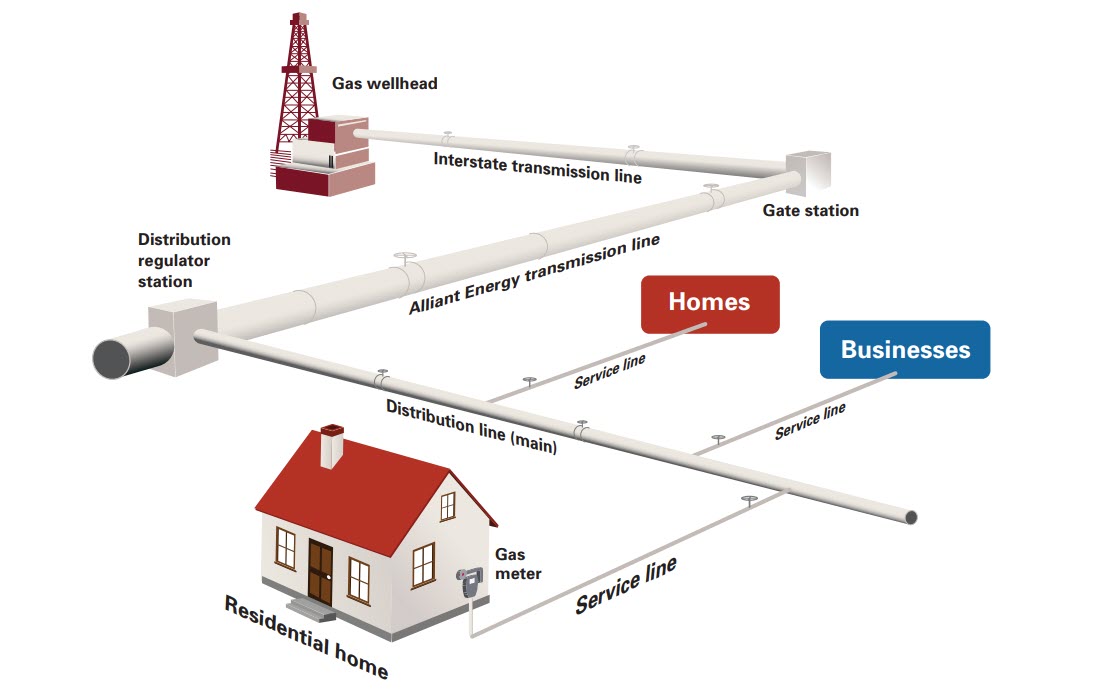
The Science Behind the Explosion: Gas Migration

pipeline leak
gas pipeline homes drawing

One of the most important—and least understood—factors in the Centreville explosion is how natural gas behaves once it escapes underground infrastructure.

Natural gas (primarily methane) is lighter than air, but when released underground, it does not simply rise and dissipate. Instead, it:

  • Travels through porous soil
  • Follows utility trenches and conduits
  • Moves along pipe corridors and voids
  • Enters homes through foundation cracks and basements

Investigators confirmed that gas in Centreville was detected:

  • Underground in yards
  • Along pipeline pathways
  • Inside multiple nearby homes

This phenomenon—known as gas migration—means the source of a leak may not be where the explosion ultimately occurs.

Once inside a structure, natural gas rises and accumulates near ceilings and attic spaces, creating a highly combustible environment.

The Lower Explosive Limit: A Ticking Clock

The danger of natural gas is defined by its Lower Explosive Limit (LEL).

For methane:

  • LEL ≈ 5% concentration in air

Once this threshold is reached:

  • Any ignition source can trigger an explosion
    • Light switches
    • Appliances
    • Static electricity

In Centreville, gas likely accumulated inside the home over several hours, gradually approaching this critical threshold.

The house effectively became a pressurized fuel chamber, waiting for a spark.

Infrastructure Failure: Not Just an “Old Pipe” Problem

Investigators traced the likely source of the leak to a 6-inch polyethylene gas main near Quail Pond Court and Belle Plains Drive.

This detail is critical.

Polyethylene pipes are considered modern infrastructure, widely used to replace older cast iron and steel systems. They are:

  • Corrosion-resistant
  • Flexible
  • Designed for long-term durability

Yet in Centreville:

  • The pipe failed pressure testing
  • It could not maintain system integrity
  • It required removal for further analysis

This underscores a key takeaway:

Pipeline risk is not limited to aging infrastructure—it exists even in newer systems.

Factors that can contribute to failure include:

  • Ground shifting or settling
  • Installation defects
  • Stress cracking over time
  • External environmental pressures

The Delayed Shutdown: A Systemic Risk

One of the most concerning aspects of the Centreville incident is what happened after the explosion.

Natural gas service to the area was not fully shut off until approximately 12:40 a.m., nearly three hours after the blast.

This delay highlights another critical vulnerability:

  • System isolation is not always immediate
  • Gas can continue flowing even after a catastrophic failure

For emergency responders and residents, this creates ongoing risk:

  • Secondary explosions
  • Continued gas migration
  • Extended evacuation periods

The Real Impact: More Than One Home

While headlines focused on the destroyed house, the broader impact was far greater:

  • 1 home completely destroyed
  • Multiple homes structurally damaged
  • 46 homes evacuated
  • 50+ families displaced
  • Gas service shut down across the neighborhood

For many residents, the disruption lasted over a week, with no access to heating or cooking gas while investigators worked to secure the system.

This illustrates an important point:

A single pipeline failure can disrupt an entire community.

Why Centreville Matters for DrillingMaps Readers

For readers of DrillingMaps.com—who track energy infrastructure, pipelines, and industrial risk—the Centreville explosion is more than a local story.

It is a case study in distribution-level failure, showing how:

  • Small-diameter local pipelines can cause large-scale damage
  • Suburban neighborhoods are not immune to energy risks
  • Infrastructure visibility remains limited to the public

Unlike transmission pipelines, which are often mapped and monitored, local distribution networks are largely invisible.

Yet these are the lines that run directly beneath homes, schools, and streets.

The Missing Layer: Consumer Awareness

One of the most striking aspects of natural gas safety is how little visibility homeowners have into the infrastructure beneath them.

Most residents:

  • Do not know where pipelines run
  • Cannot detect underground leaks
  • Rely entirely on utilities for safety

Even the smell of gas—mercaptan—can fail:

  • It can dissipate or weaken in soil
  • Some individuals cannot detect it
  • Odor fade can occur before gas reaches homes

In Centreville, despite odor reports, the situation escalated into a full-scale explosion.

Early Detection: The Last Line of Defense

The Centreville explosion reinforces a critical reality:

Time is the only advantage in a gas leak scenario.

Traditional residential gas detectors:

  • Often trigger at 20–25% of LEL
  • May be installed near floor-level outlets

But natural gas:

  • Accumulates near ceilings
  • Can reach dangerous levels before detection

Advanced detection systems that:

  • Trigger at lower thresholds (e.g., 10% LEL)
  • Are mounted higher on walls

can provide valuable additional minutes for evacuation.

In fast-moving leak scenarios, those minutes can mean the difference between:

  • Safe evacuation
  • Catastrophic loss

A National Issue Playing Out Locally

The Centreville explosion is not an isolated anomaly—it reflects broader trends across U.S. infrastructure:

  • Increasing stress on pipeline systems
  • Expansion of suburban gas networks
  • Limited public awareness of underground risks

Even as utilities invest in modernization, the system remains:

  • Complex
  • Distributed
  • Vulnerable to localized failure

Conclusion: Lessons From Quail Pond Court

The events in Centreville offer a clear and sobering lesson.

This was not a sudden, unpredictable disaster. It was a slow-developing failure with warning signs that unfolded over hours.

  • A known gas leak
  • A dangerous classification
  • Active repair efforts
  • No evacuation
  • Delayed shutdown

The result: a home destroyed and a neighborhood disrupted.

For homeowners, urban planners, and infrastructure professionals, the takeaway is clear:

Natural gas systems are reliable—until they aren’t. And when they fail, they fail fast.

The Centreville explosion should serve as a wake-up call—not just for one Virginia neighborhood, but for every community built on top of unseen energy infrastructure.

Because the next leak won’t announce itself with a headline.

And the next explosion may not end with only minor injuries.

AI Sensors in Oil & Gas: Methane Detection and Safety Monitoring

AI Sensors in the Oil and Gas Industry: Methane Detection, Safety, and Environmental Monitoring

Introduction: AI Meets Oil & Gas

The oil and gas industry has always been high-risk, both for workers and surrounding communities. Beyond explosions and spills, one of the most invisible threats comes from methane emissions and other harmful pollutants that leak from active and abandoned wells. Traditional detection methods often fail to identify these hazards quickly. Today, AI-powered sensors and cameras are changing that reality by providing real-time monitoring, predictive analytics, and automated alerts that protect both people and the environment.

Methane Detection: An Invisible Hazard

Methane is a potent greenhouse gas, estimated to be more than 80 times more powerful than CO₂ in trapping heat over a 20-year period. It also poses explosion risks near residential and industrial sites. Unfortunately, leaks from aging pipelines, storage tanks, and abandoned wells often go unnoticed until they cause major problems.

AI-enhanced methane sensors are now being deployed in key oil and gas regions, particularly in cities like Los Angeles, where thousands of abandoned wells sit near homes and schools. These smart sensors:

  • Continuously scan for leaks that human inspectors might miss.

  • Use machine learning to distinguish between background emissions and hazardous concentrations.

  • Provide real-time alerts to operators, regulators, and local communities.

By mapping these leaks, platforms like DrillingMaps.com give residents and policymakers valuable transparency into environmental risks.

Abandoned Oil Wells: Monitoring Legacy Hazards

The U.S. is home to more than 3 million abandoned oil and gas wells, many of which were never properly sealed. These sites can leak methane, hydrogen sulfide, and other toxic gases for decades.

Traditionally, inspections required manual field surveys—slow, costly, and incomplete. AI sensors and drone-mounted cameras are now making it possible to:

  • Survey large areas quickly.

  • Identify wellheads that are emitting methane.

  • Prioritize high-risk wells for remediation funding.

  • Share open-source data with the public for accountability.

In Los Angeles, AI methane detection programs have revealed leaks in neighborhoods long after operators had abandoned responsibility, giving regulators stronger evidence to demand cleanup.

AI Cameras in Oilfields: Safety and Compliance

Beyond air quality, AI-powered cameras are being integrated into oilfields and refineries to improve safety monitoring. Unlike traditional CCTV, these cameras use computer vision algorithms to detect abnormal activity in real time.

Common Applications of AI Cameras in Oil & Gas:

  • Gas Flares: Monitoring flare stacks to ensure emissions meet regulatory standards.

  • Worker Safety: Detecting when workers enter restricted zones or fail to wear protective equipment.

  • Pipeline Monitoring: Identifying leaks, corrosion, or unauthorized access.

  • Thermal Imaging: Spotting temperature anomalies that could indicate leaks or equipment failure.

This shift from passive video recording to active hazard detection means incidents can be prevented rather than just recorded.

Regulatory Pressure and Transparency

Governments are tightening methane emission regulations, with the U.S. EPA and international agencies demanding more frequent monitoring and accurate reporting. AI sensors help oil and gas operators comply by providing 24/7, verifiable emissions data.

  • Continuous Monitoring: Unlike quarterly manual inspections, AI sensors provide constant oversight.

  • Automated Reports: Data can be fed directly into compliance systems.

  • Community Dashboards: Public-facing platforms show residents what’s happening in real time.

These tools make it harder for polluters to underreport emissions and allow regulators to prioritize enforcement where it matters most.

Integration with Smart Mapping

AI sensors become even more powerful when integrated with mapping platforms. For example:

  • DrillingMaps.com tracks active and abandoned wells, which can be overlaid with AI sensor data.

  • RefineryMaps.com highlights industrial zones where emissions monitoring is critical.

  • PowerPlantMaps.com provides context for nearby environmental hazards.

By combining geospatial data with AI monitoring, communities and operators gain a clearer picture of risks—and how to mitigate them.

Challenges for AI in Oil & Gas Monitoring

While the promise is clear, challenges remain:

  • Calibration: Sensors must be regularly validated for accuracy.

  • Cost: Deploying AI systems across thousands of wells requires investment.

  • Data Overload: Operators need systems to interpret massive streams of sensor data.

  • Access Issues: Some abandoned wells are on private property or hard-to-reach land.

Even with these challenges, the cost of inaction—explosions, greenhouse gas emissions, lawsuits—far outweighs the expense of deploying AI solutions.

The Future: AI as a Watchdog for Oil & Gas

As technology advances, we can expect more automation in environmental safety monitoring:

  • Drones with AI sensors scanning oilfields for leaks.

  • Satellite imagery combined with ground sensors to track methane plumes globally.

  • Predictive models that forecast when and where leaks are likely to occur.

  • Public access dashboards giving communities transparency over nearby oil and gas sites.

These innovations position AI not just as a tool for compliance, but as a true watchdog for public health and environmental safety in oil and gas regions.

Conclusion

The oil and gas industry faces a dual challenge: maintaining energy production while reducing its environmental impact. AI sensors and cameras offer a path forward, enabling real-time detection of methane leaks, improving safety on worksites, and providing communities with vital transparency.

From abandoned wells in Los Angeles to active oilfields across the U.S. and beyond, AI is transforming how emissions are tracked and hazards are managed. As regulations tighten and climate concerns grow, these technologies will be central to protecting both industry workers and the communities living alongside energy infrastructure.

Smell Gas In or Near Your Home? Here's What to Do

Smelling gas in or around your home is a serious safety concern. Whether it’s natural gas, propane, or methane from a nearby source like an abandoned oil well or pipeline, taking immediate action can save lives and prevent disasters.

🚨 First, Act Fast – Safety First

If you detect a rotten egg or sulfur-like smell, it could be a gas leak. Here's what you should do immediately:

1. Evacuate the Area

Leave your home or the affected area without turning lights on or off, using appliances, or touching anything that could cause a spark.

2. Do Not Use Electronics or Phones Indoors

Cell phones, light switches, or even garage door openers can trigger explosions. Wait until you’re safely outside to make any calls.

3. Call 911 or Your Gas Utility Emergency Line

Report the smell to emergency services or your local gas company right away. Most major gas providers have 24/7 emergency response teams.

4. Warn Neighbors If You Can

If it’s safe, alert others in nearby homes, especially if you're in an apartment or condo.

🛠 Common Sources of Residential Gas Smells

Gas odors can come from multiple sources:

Knowing the source can help guide next steps, but do not investigate leaks yourself. Leave that to trained professionals.

🧪 When It's Not the Stove: Underground or Environmental Gas Leaks

Many homeowners live near old oil wells, underground pipelines, or natural gas storage sites without realizing it. These can leak methane into basements, crawl spaces, or even the air around your home.

✅ How to Check:

🔧 After the Leak: What Comes Next?

Once authorities have resolved the immediate danger:

🧭 Preventive Tips for Homeowners

  1. Get annual inspections for all gas-powered appliances.

  2. Know your surroundings—especially if you live near drilling sites or old infrastructure.

  3. Install methane/gas sensors in low-lying areas like basements.

  4. Seal foundation cracks to reduce entry points for gas vapors.

⚠️ Don’t Ignore That Smell

Even a faint gas odor deserves your full attention. Leaks can lead to explosions, fires, or long-term health issues from chronic exposure. Stay safe, act fast, and know where to get help.

🔍 Related Searches People Are Asking:

  • What does natural gas smell like?

  • Can a gas leak kill you?

  • How far does gas travel underground?

  • Who to call for a gas smell outside?

  • Are abandoned oil wells dangerous?

Want to check if you're near a leaking well or old pipeline?
Visit DrillingMaps.com to search your address and explore safety data near you.

Is it Safe to Live Near Fracking?

Porter Ranch Gas Leak Map

The safety of living near fracking (hydraulic fracturing) operations is a complex and debated topic. While fracking has been widely used to extract natural gas and oil, there are concerns regarding potential risks to human health and the environment. 

Why Was All of LA County Notified of Residential Gas Leak?

Why was all of Los Angeles County notified of Gasleak is in a residential area?