Safety is a top priority in the construction and industrial sectors. Potential clients seeking contractors or service providers want assurance that their projects will be carried out with the utmost consideration for the safety of workers, the public, and the environment. Demonstrating your safety record to potential clients is not only a competitive advantage but also a reflection of your commitment to excellence. Here's how you can effectively showcase your safety record to win the trust of prospective clients.
Safety is a top priority in every industry, but it holds particular significance in the oil and gas sector. The extraction, refining, and transportation of oil and gas come with inherent risks, making stringent safety measures crucial to protecting workers and the environment. This article delves into the importance of oil and gas safety, highlighting key practices, regulations, and technologies that ensure a secure workplace in this vital industry.
Oil and gas pipelines play a crucial role in transporting energy resources across vast distances, powering industries, and heating homes. In the beautiful state of Colorado, these pipelines crisscross the landscape, contributing significantly to the energy needs of the region. However, ensuring the safety of these pipelines is of paramount importance to protect both the environment and the communities they traverse. In this article, we delve into the measures, regulations, and technologies in place to guarantee the safety of oil and gas pipelines in Colorado.
Syndicated Maps has recently launched a value-packed bundled subscription that gives users access to all 22 of its niche maps for just $9.95 per month—a savings of over 50% compared to subscribing individually. This all-access plan was created in response to user demand for a more affordable way to explore multiple data layers across traffic enforcement, environmental hazards, wireless coverage, energy infrastructure, and public safety. Whether you're a researcher, commuter, traveler, or concerned homeowner, this bundle lets you seamlessly tap into detailed, location-based intelligence from across the entire network.
Each map serves a specific purpose—from helping drivers avoid speed traps to alerting families about nearby environmental hazards. The Syndicated Maps network has earned the trust of millions of users annually, including commuters, journalists, health professionals, and urban planners.
Why Subscribe to DrillingMaps.com?
Are you in the oil and gas industry and prioritize safety and compliance? Are you looking to move to a new residential location and want to learn about a particular area that might have oil and gas drilling in the neighborhood? DrillingMaps.com offers a comprehensive Health and Safety Map Database that ensures you stay informed and compliant at all times. Here’s why subscribing to our service makes perfect sense:
1. Comprehensive Coverage: Our Health and Safety Map Database provides extensive coverage of drilling sites, ensuring you have access to crucial safety information wherever your business operations or residencies take you.
2. Real-Time Updates: Stay ahead with real-time updates on regulatory changes and safety measures relevant to your operations. Our database is constantly updated to reflect the latest information.
3. User-Friendly Interface: Easily navigate through our user-friendly interface designed for quick access to essential safety data. Find what you need efficiently and effectively by searching the map.
4. Cost-Effective Pricing: We believe safety shouldn’t come at a premium. Subscribe for just 0.03 cents per day or $1 per month to gain access to invaluable safety resources that protect your family and workforce.
5. Peace of Mind: With DrillingMaps.com, you can move to a new area and not wonder what might be going on that wasn't disclosed to you in the disclosures.
Methane is a highly flammable gas that naturally occurs in oil and gas fields. It also poses significant environmental and health risks when it migrates into residential and commercial spaces. In urban areas with historical industrial activities, oil extraction, and gas storage, methane leaks have become a growing concern. This article explores the problems associated with methane leaks, how they are detected and mitigated, and the key players responsible for ensuring public safety.
Why Methane Leaks Are Dangerous in Urban Areas
Methane is a potent greenhouse gas and an immediate safety threat. When methane accumulates in confined spaces such as homes, businesses, or underground utilities, it displaces oxygen and creates a dangerous environment. Symptoms of methane exposure include:
Headaches and dizziness
Fatigue and nausea
Cognitive issues or memory loss
Asphyxiation in extreme cases
Methane leaks in urban environments are particularly dangerous due to the high population density and aging infrastructure. The U.S. Environmental Protection Agency (EPA) estimates that methane leaks from pipelines account for over 10% of total natural gas emissions in the U.S. annually.
Notable Methane Leak Incidents
Here are 10 examples of areas where methane leaks have been a problem for the community:
Aliso Canyon, California (2015) One of the largest methane leaks in U.S. history, releasing over 100,000 metric tons of methane. The leak forced the evacuation of thousands of residents and caused widespread health issues.
Sierra Madre, California (2016) Methane leaked from an improperly sealed abandoned oil well near residential areas. The gas infiltration caused dizziness, headaches, and nausea among residents.
Brighton, Colorado Elevated methane levels have been detected near both active and abandoned oil and gas wells. Local authorities have worked to seal the wells and prevent further migration of methane into homes.
New York City, New York Aging gas infrastructure in New York City has caused frequent methane leaks, particularly from corroded pipelines. The city's dense population makes these leaks a serious concern.
Porter Ranch, California (2015-2016) A massive methane leak from the Southern California Gas Company’s Aliso Canyon facility impacted residents of Porter Ranch. The leak lasted for several months and led to health problems, relocation of thousands, and increased public awareness of methane risks.
Playa Vista, California Located in Los Angeles, Playa Vista was developed on former oil fields, raising concerns about methane migration. Developers are required to install advanced gas mitigation systems due to the area's legacy oil extraction activities.
Frackville, Pennsylvania In rural Pennsylvania, methane leaks have been reported near abandoned coal mines. The gas has been migrating into nearby communities, creating safety hazards and health concerns.
Boulder, Colorado Elevated methane levels have been found in parts of Boulder, particularly in areas where oil and gas production occurred decades ago. Local authorities monitor these areas and require mitigation efforts to ensure public safety.
Long Beach, California Long Beach has experienced methane migration from aging oil wells in the area. The city has taken measures to address the risks by monitoring and sealing old wells and improving infrastructure.
Windsor, Colorado In Windsor, Colorado, residents have faced methane leaks from nearby oil and gas operations, which have led to health complaints. Local authorities have worked with the Colorado Oil and Gas Conservation Commission (COGCC) to address the leaks and improve safety protocols.
These examples illustrate the diverse ways in which methane leaks affect both urban and rural communities. Each area requires targeted efforts to address the source of the leak, mitigate risks, and protect public health and safety.
Health Risks and Environmental Impact of Methane Leaks
The health risks associated with methane leaks are significant, and the environmental impact can be severe. Methane is 25 times more potent than carbon dioxide at trapping heat in the atmosphere, making its leak detection and mitigation critical for both public safety and climate change.
Health risks from prolonged methane exposure include:
Chronic headaches and fatigue
Respiratory issues due to oxygen displacement
Long-term cognitive damage in severe cases
Who Is Responsible for Preventing and Managing Methane Leaks?
Prevention and mitigation of methane leaks require coordinated efforts from multiple stakeholders. Here's a breakdown of who is responsible for ensuring safety:
Government Agencies Local, state, and federal bodies regulate methane emissions. For example, the California Department of Conservation and the EPA enforce standards for gas storage, well abandonment, and leak detection.
Private Developers and Construction Companies Developers must adhere to methane safety protocols, including installing sub-slab venting systems and gas detectors to monitor levels in high-risk areas. Developers in regions like Playa Vista, California, are required to implement advanced systems to prevent leaks.
Utility Companies Companies like Southern California Gas and Consolidated Edison are responsible for maintaining and monitoring gas pipelines. Regular infrastructure maintenance and swift leak responses are essential to preventing accidents in high-density areas.
Advanced Methane Leak Detection Technologies
Early detection is critical in preventing disasters. Here are some of the latest technologies used to detect methane leaks:
Infrared Gas Detectors: These sensors can detect methane even in low concentrations and provide real-time readings.
Flow Meters and Gas Detectors: These systems monitor methane flow and levels, triggering alarms if concentrations exceed safe limits.
Statistical Insight: Advanced methane detection systems have reduced methane leaks by 40% in certain regions, according to the EPA.
Actionable Steps for Residents and Business Owners
What can you do to help detect and prevent methane leaks? Here are some actionable takeaways:
Install Methane Detectors: Ensure that you have methane detectors installed in basements, parking garages, and other high-risk areas.
Monitor Local Infrastructure: Advocate for regular inspections and maintenance of gas pipelines and infrastructure in your area.
Report Suspected Leaks: If you notice symptoms of methane exposure or suspect a leak, report it immediately to local authorities or utility companies.
How Methane Leaks Are Mitigated
Efforts to reduce methane emissions focus on detection, prevention, and response. Key strategies include:
Sub-Slab Venting Systems: These systems use perforated pipes and gas-proof membranes to safely vent methane into the atmosphere before it can enter buildings.
Regular Regulation Enforcement: Government agencies enforce methane mitigation protocols, ensuring compliance with safety standards.
Emergency Response Plans: If a methane leak is detected, immediate evacuation protocols are put into action. For example, the Porter Ranch incident prompted quick evacuation and a targeted emergency response to protect residents.
Conclusion: A Safer, More Sustainable Future
While methane leaks are a serious concern, advanced detection technologies, stringent regulations, and coordinated mitigation efforts can significantly reduce the risks associated with these leaks. By ensuring collaboration between government agencies, utility companies, developers, and local communities, we can create safer, more sustainable urban environments.
For more information on how to mitigate methane risks in your area, visit government resources or reach out to local community groups advocating for environmental safety.
DrillingMaps.com is a valuable resource for communities, researchers, and policymakers looking to understand the impacts of oil and gas drilling. The platform’s interactive maps provide critical data on drilling locations, associated health risks, and potential environmental consequences. Here’s how the map can help solve various problems:
Identifying Proximity to Drilling Sites
One of the primary uses of DrillingMaps.com is to determine how close a property or community is to active or inactive drilling sites. This information helps homeowners, prospective buyers, and local officials make informed decisions about property value, safety, and potential health concerns.
Monitoring Health and Safety Issues
The map enables users to report health problems, such as respiratory issues or contaminated water, linked to nearby drilling operations. By aggregating these reports, communities can identify patterns and push for necessary interventions or policy changes.
Analyzing Environmental Impact
Researchers and environmental advocates leverage DrillingMaps.com to track the density of drilling operations and analyze correlations with environmental issues like water pollution, air quality degradation, and noise pollution. This data aids in long-term environmental monitoring and advocacy efforts.
Supporting Legal and Regulatory Efforts
Lawyers and government agencies can utilize the map to confirm drilling site locations and examine compliance with safety and environmental regulations. Access to accurate, real-time data strengthens the case for enforcing regulations or filing complaints.
Real Estate Risk Assessment
Investors and developers can use the platform to evaluate the safety of potential projects by identifying drilling hotspots. Areas with a high density of sites may pose long-term risks to property values and occupant health.
Enhancing Public Awareness
Activists use DrillingMaps.com to create awareness campaigns focused on the dangers of nearby drilling. Sharing data and maps through social media helps communities advocate for stronger regulations and better safety practices.
Emergency Planning
Municipal planners use the platform to map drilling sites relative to critical infrastructure like schools, hospitals, and residential neighborhoods. This helps improve disaster preparedness and inform evacuation routes.
Conclusion
DrillingMaps.com serves as a powerful tool for community safety, health monitoring, and environmental protection. By offering detailed, real-time data on drilling operations, the platform empowers individuals and organizations to make data-driven decisions. Whether you’re a homeowner concerned about nearby wells or an activist pushing for change, DrillingMaps.com makes vital information accessible and actionable.
An oil rig construction site is a
minefield of potential hazards and safety issues, and nothing is more paramount
that being savvy when you’re on a construction site. Whether you’re visiting
the site, working in a different capacity on it or the person actually handling
the construction equipment, be vigilant, aware, and safety-conscious at all
times.
Heavy equipment is a
necessity for this sort of job, and it’s also crucial to ensure you’re using
the best equipment suited for the task at hand.
Bear the following safety
tips in mind while carrying out your work.
Training
There is probably nothing
more important than the initial training before you even begin using the necessary
equipment, and this should be a balance of classroom-based learning and
practical demonstration.
Training should not only
include the safety issues involved in using the equipment, but also the safety
regarding you, as well. For example, the correct and safest way to mount or
dismount and the best way to identify hazards.
If you don’t feel like you
have been adequately trained or if anything during your training feels unclear,
always raise the concern before you
agree to use any equipment.
Always Check the Equipment Before Use
It’s vital to perform a
visual check on anything before you start it up and begin your work. It needs
to be in good
operating condition, and any red flags should be raised before you even
consider using it.
If the equipment is in good
enough condition for you to start it up, don’t proceed until you’ve also double
checked that all lights and gauges are working correctly, too, as these will
need to be working to inform you if something is wrong.
You can find a range of
heavy equipment and details on their proper use at www.machineproviders.com.
Be Aware of your Surroundings
It’s easy to become focused
on the job at hand and be oblivious to other things which might be happening on
the site. It may sound good to be solely concentrating on the piece of
machinery you are using, but you also need to be aware of potential bystanders,
other workers and hazards such as power lines or pipes if you are digging.
Spatial awareness is also crucial if you are using equipment which has a swing
radius.
Ensure You Have the Correct PPE
This is another area which
should have been covered in your training, and all Personal
Protective Equipment (PPE) should be provided to you before commencing
work. This can include:
Safety
glasses
Safety
boots
Hard
hats
Gloves
If you feel that any item is
missing or an extra item is needed, be sure to speak to an authority figure
about it before you begin using your equipment.
It’s also important to
ensure that any PPE supplied to you is well-fitting and the correct size; if
you have boots which are loose and fit uncomfortably, for example, this can be
a hazard in itself, especially if you are operating a machine which uses foot
pedal control.
AI Sensors in the Oil and Gas Industry: Methane Detection, Safety, and Environmental Monitoring
Introduction: AI Meets Oil & Gas
The oil and gas industry has always been high-risk, both for workers and surrounding communities. Beyond explosions and spills, one of the most invisible threats comes from methane emissions and other harmful pollutants that leak from active and abandoned wells. Traditional detection methods often fail to identify these hazards quickly. Today, AI-powered sensors and cameras are changing that reality by providing real-time monitoring, predictive analytics, and automated alerts that protect both people and the environment.
Methane Detection: An Invisible Hazard
Methane is a potent greenhouse gas, estimated to be more than 80 times more powerful than CO₂ in trapping heat over a 20-year period. It also poses explosion risks near residential and industrial sites. Unfortunately, leaks from aging pipelines, storage tanks, and abandoned wells often go unnoticed until they cause major problems.
AI-enhanced methane sensors are now being deployed in key oil and gas regions, particularly in cities like Los Angeles, where thousands of abandoned wells sit near homes and schools. These smart sensors:
Continuously scan for leaks that human inspectors might miss.
Use machine learning to distinguish between background emissions and hazardous concentrations.
Provide real-time alerts to operators, regulators, and local communities.
By mapping these leaks, platforms like DrillingMaps.com give residents and policymakers valuable transparency into environmental risks.
Abandoned Oil Wells: Monitoring Legacy Hazards
The U.S. is home to more than 3 million abandoned oil and gas wells, many of which were never properly sealed. These sites can leak methane, hydrogen sulfide, and other toxic gases for decades.
Traditionally, inspections required manual field surveys—slow, costly, and incomplete. AI sensors and drone-mounted cameras are now making it possible to:
Survey large areas quickly.
Identify wellheads that are emitting methane.
Prioritize high-risk wells for remediation funding.
Share open-source data with the public for accountability.
In Los Angeles, AI methane detection programs have revealed leaks in neighborhoods long after operators had abandoned responsibility, giving regulators stronger evidence to demand cleanup.
AI Cameras in Oilfields: Safety and Compliance
Beyond air quality, AI-powered cameras are being integrated into oilfields and refineries to improve safety monitoring. Unlike traditional CCTV, these cameras use computer vision algorithms to detect abnormal activity in real time.
Common Applications of AI Cameras in Oil & Gas:
Gas Flares: Monitoring flare stacks to ensure emissions meet regulatory standards.
Worker Safety: Detecting when workers enter restricted zones or fail to wear protective equipment.
Thermal Imaging: Spotting temperature anomalies that could indicate leaks or equipment failure.
This shift from passive video recording to active hazard detection means incidents can be prevented rather than just recorded.
Regulatory Pressure and Transparency
Governments are tightening methane emission regulations, with the U.S. EPA and international agencies demanding more frequent monitoring and accurate reporting. AI sensors help oil and gas operators comply by providing 24/7, verifiable emissions data.
Continuous Monitoring: Unlike quarterly manual inspections, AI sensors provide constant oversight.
Automated Reports: Data can be fed directly into compliance systems.
Community Dashboards: Public-facing platforms show residents what’s happening in real time.
These tools make it harder for polluters to underreport emissions and allow regulators to prioritize enforcement where it matters most.
Integration with Smart Mapping
AI sensors become even more powerful when integrated with mapping platforms. For example:
DrillingMaps.com tracks active and abandoned wells, which can be overlaid with AI sensor data.
RefineryMaps.com highlights industrial zones where emissions monitoring is critical.
By combining geospatial data with AI monitoring, communities and operators gain a clearer picture of risks—and how to mitigate them.
Challenges for AI in Oil & Gas Monitoring
While the promise is clear, challenges remain:
Calibration: Sensors must be regularly validated for accuracy.
Cost: Deploying AI systems across thousands of wells requires investment.
Data Overload: Operators need systems to interpret massive streams of sensor data.
Access Issues: Some abandoned wells are on private property or hard-to-reach land.
Even with these challenges, the cost of inaction—explosions, greenhouse gas emissions, lawsuits—far outweighs the expense of deploying AI solutions.
The Future: AI as a Watchdog for Oil & Gas
As technology advances, we can expect more automation in environmental safety monitoring:
Drones with AI sensors scanning oilfields for leaks.
Satellite imagery combined with ground sensors to track methane plumes globally.
Predictive models that forecast when and where leaks are likely to occur.
Public access dashboards giving communities transparency over nearby oil and gas sites.
These innovations position AI not just as a tool for compliance, but as a true watchdog for public health and environmental safety in oil and gas regions.
Conclusion
The oil and gas industry faces a dual challenge: maintaining energy production while reducing its environmental impact. AI sensors and cameras offer a path forward, enabling real-time detection of methane leaks, improving safety on worksites, and providing communities with vital transparency.
From abandoned wells in Los Angeles to active oilfields across the U.S. and beyond, AI is transforming how emissions are tracked and hazards are managed. As regulations tighten and climate concerns grow, these technologies will be central to protecting both industry workers and the communities living alongside energy infrastructure.
In the vast and rugged landscapes of the oil and gas industry, staying connected is essential for efficiency, safety, and productivity. Traditional methods of communication in remote areas have often been challenging and unreliable. However, with the advent of satellite internet technology like SpaceX's Starlink, a new era of connectivity has emerged, revolutionizing how remote rigs are monitored and managed.
Living near an oil storage depot might seem convenient due to the proximity to energy sources and potential employment opportunities. However, the reality is that these facilities pose significant risks to nearby residents. From potential explosions and fires to chronic health issues and environmental degradation, the dangers associated with living close to an oil storage depot are substantial and multifaceted.
Oil and gas exploration and drilling are essential components of the global energy industry. However, for homeowners and residents living near potential drilling sites, the question of how close oil and gas companies can drill to their homes is a matter of concern. In this article, we will explore the factors that influence drilling proximity, including regulations, well types, and environmental considerations.
Natural gas powers millions of homes, businesses, and industrial facilities across the United States and globally. But while it’s efficient and widely used, it also presents a hidden risk: methane leaks can accumulate silently and ignite with devastating consequences.
Unlike smoke detectors or carbon monoxide alarms, natural gas detectors are not universally required—yet. However, that is rapidly changing as cities, states, and countries respond to explosions, infrastructure aging, and environmental concerns.
This guide breaks down:
Where natural gas detectors are required
Why certain regions are adopting them faster
How the technology works
The best natural gas detectors on the market
What Is a Natural Gas Alarm?
A natural gas alarm (or methane detector) is a device designed to:
Detect methane (CH₄), the primary component of natural gas
Trigger an audible (and sometimes digital) alert
Warn occupants before gas reaches dangerous levels
Most devices are calibrated to alarm well below the Lower Explosive Limit (LEL)—typically between 10–25% of LEL—to provide early warning.
Think of them as the “smoke detectors of gas leaks”—but for an invisible, odorless threat.
Why Natural Gas Detectors Are Not Yet Universal
Unlike smoke or carbon monoxide alarms, gas detection is more complex:
Hundreds of gases exist with different behaviors
Some rise (methane), others sink (propane)
Detection thresholds vary widely
Because of this, regulations focus on air quality and risk management rather than mandating specific devices.
Still, agencies like the National Transportation Safety Board (NTSB) strongly recommend installing them in homes and buildings.
Where Natural Gas Detectors Are Required (or Emerging)
1. New York City (Leading the U.S.)
New York City is the most aggressive adopter:
Local Law 157 requires natural gas detectors in all residential buildings
Compliance deadline: May 1, 2025
Applies to apartments, condos, hotels, and houses
Must meet NFPA 715 standards
Placement rules include:
Within 10 feet of gas appliances
Near sleeping areas
NYC’s push came after multiple fatal gas explosions in the 2010s.
2. New York State (Expanding Statewide)
New York is considering broader legislation requiring:
Gas detectors in all dwellings
Connectivity to gas utilities for reporting leaks
This reflects a shift toward smart infrastructure and real-time leak monitoring.
3. Maine & Northeast States
Some Northeast states have already enacted laws:
Detectors required in rooms with gas appliances
Expanding to commercial buildings by 2026
These regions share common traits:
Older housing stock
Cold climates with heavy gas usage
Dense urban environments
4. California (Recommended, Not Required)
In California:
Not legally required statewide (yet)
Strongly recommended by utilities like PG&E
Driven by wildfire risk and infrastructure concerns
The state has experienced high-profile gas explosions, including the San Bruno disaster, which increased awareness.
5. Europe (Regulation Driven by Emissions & Safety)
Europe is rapidly advancing methane detection due to:
EU Methane Regulation (2025) requiring emissions monitoring
Leak Detection and Repair (LDAR) programs
Focus on climate impact of methane
Modern detectors are now used for:
Utility infrastructure monitoring
Industrial compliance
Residential safety in some countries
6. Monaco & Select European Regions
Some regions mandate gas-related detection devices:
Monaco requires detectors in homes connected to gas systems
Across Europe, adoption is often tied to:
Insurance requirements
Building codes
Environmental policy
Why Certain Regions Adopt Faster
1. Urban Density
Cities like NYC:
High-rise buildings
Shared gas lines
Greater risk of multi-unit explosions
2. Aging Infrastructure
Older pipelines increase leak probability:
Northeast U.S.
Historic European cities
3. Cold Weather Dependence
Regions relying heavily on gas heating:
Northeast U.S.
Northern Europe
4. Regulatory Pressure
Europe leads due to:
Climate mandates
Methane emissions tracking
5. History of Explosions
Major incidents often trigger legislation:
NYC (2014–2015 explosions)
California (San Bruno)
How Natural Gas Detectors Work
Most residential and commercial detectors use:
Sensor Types
Semiconductor (MOS): Common in home devices
Infrared (NDIR): More accurate, used in industrial settings
Electrochemical: For toxic gases
Detection Process
Air is sampled continuously
Methane concentration is measured
Alarm triggers when threshold is reached
Alarm Thresholds
Typically set below explosion risk (10–25% LEL)
Top Natural Gas Leak Detectors (2026 Comparison)
Below are some of the most popular and widely used residential and commercial detectors.
Best Overall: DeNova Detect Gas Alarm (NYC-Compliant)
Why it stands out:
10-year battery life
Fully compliant with NYC Local Law 157
No wiring required
UL-certified (UL1484)
Best for:
Apartments and rental compliance
Landlords and property managers
Best Plug-In Detector: Kidde Nighthawk
Features:
Plug-in with battery backup
Digital display
Trusted brand in fire safety
Best for:
Homeowners wanting simple installation
Best Budget Option: EG Air Detector
Features:
Affordable
Dual detection (methane + propane)
Loud alarm system
Best for:
Basic residential safety
Best Portable Detector: Techamor Y201
Features:
Handheld
Flexible probe
Used for inspections and leak detection
Best for:
Contractors and inspectors
Product Comparison Table
Feature
DeNova Detect
Kidde Nighthawk
EG Air Detector
Techamor Y201
Power Source
Battery (10-year)
Plug-in + battery
Plug-in
Rechargeable
Installation
Wall-mounted
Outlet
Outlet
Portable
Compliance
NYC LL157
General use
General use
Industrial
Best Use
Apartments
Homes
Budget homes
Leak inspections
Smart Features
Limited
Digital display
Basic
Advanced sensing
Where to Install Natural Gas Detectors
According to NFPA 715 guidelines:
Within 12 inches of the ceiling (for methane)
In every room with gas appliances
Near sleeping areas
Not directly next to vents or windows
Proper placement is critical—methane rises, so ceiling-level detection is key.
Benefits of Installing Gas Leak Detectors
1. Prevent Explosions
Gas buildup can ignite with a single spark.
2. Early Warning Saves Lives
Detectors alert occupants before dangerous levels accumulate.
3. Property Protection
Leaks can cause:
Structural damage
Fires
Insurance claims
4. Regulatory Compliance
Increasingly required in:
NYC
Northeast states
Europe
5. Smart Monitoring Integration
Modern detectors can:
Send mobile alerts
Connect to utilities
Enable remote monitoring
The Future of Natural Gas Detection
The industry is moving toward:
Smart Infrastructure
Utility-connected detectors
Real-time leak reporting
Environmental Monitoring
Methane tracking for climate compliance
Integration with emissions reporting
Mandatory Adoption
Expect wider mandates across:
California
Major U.S. cities
EU countries
Final Thoughts
Natural gas alarms are quickly evolving from optional safety devices to essential infrastructure tools.
While not yet universally required, the trend is clear:
Urban areas are leading adoption
Regulations are expanding
Technology is improving rapidly
For homeowners, landlords, and businesses, installing a natural gas detector is no longer just a precaution—it’s becoming a standard layer of protection in a world increasingly aware of invisible risks.
The Centreville Gas Explosion (2026): A Warning About America’s Hidden Pipeline Risks
A Quiet Suburb Turned Disaster Zone
On the night of February 15, 2026, the Belle Pond Farm neighborhood in Centreville was rocked by a devastating natural gas explosion that leveled a home and forced dozens of families to evacuate.
At approximately 9:48 p.m., a powerful blast destroyed a single-family residence on Quail Pond Court, sending shockwaves through the surrounding community. Residents described the event as feeling like an earthquake or explosion, with windows shattering and homes shaking across the neighborhood.
Miraculously, despite the scale of destruction, only two minor injuries were reported. But the physical damage told a different story—one home completely obliterated, nearby structures severely damaged, and more than 46 homes evacuated as emergency crews rushed to secure the area.
While the immediate crisis captured headlines, the deeper story lies in what happened before the explosion—and what it reveals about systemic vulnerabilities in natural gas infrastructure.
A 12-Hour Warning That Went Unheeded
Investigators from the National Transportation Safety Board (NTSB) uncovered a critical detail: the explosion was not instantaneous or unpredictable.
Residents reported smelling gas as early as 10:28 a.m. that same day.
Utility crews later identified a “Grade 1” leak, the most severe classification, indicating an immediate hazard to life and property. This designation typically requires urgent action, including rapid repair and, in many cases, evacuation.
Yet, nearly 12 hours passed between the first reported gas odor and the eventual explosion.
During that time:
Gas continued leaking into the environment
Crews were actively working on the pipeline
Homes remained occupied
This timeline exposes a dangerous reality: even when a leak is known, the response window can fail to prevent disaster.
The Critical Failure Window: Detection vs. Action
The Centreville explosion highlights what safety experts often describe as the “failure window”—the period between identifying a leak and eliminating the risk.
In this case:
The leak was confirmed
Crews were dispatched
Repairs were underway
But the neighborhood was not evacuated, and gas service remained active.
When the explosion occurred, it happened while crews were still attempting to fix the problem.
This raises a critical question for infrastructure safety:
If a leak is dangerous enough to classify as Grade 1, why are residents still inside their homes?
The Centreville incident demonstrates how quickly a “managed situation” can become catastrophic.
The Science Behind the Explosion: Gas Migration
One of the most important—and least understood—factors in the Centreville explosion is how natural gas behaves once it escapes underground infrastructure.
Natural gas (primarily methane) is lighter than air, but when released underground, it does not simply rise and dissipate. Instead, it:
Travels through porous soil
Follows utility trenches and conduits
Moves along pipe corridors and voids
Enters homes through foundation cracks and basements
Investigators confirmed that gas in Centreville was detected:
Underground in yards
Along pipeline pathways
Inside multiple nearby homes
This phenomenon—known as gas migration—means the source of a leak may not be where the explosion ultimately occurs.
Once inside a structure, natural gas rises and accumulates near ceilings and attic spaces, creating a highly combustible environment.
The Lower Explosive Limit: A Ticking Clock
The danger of natural gas is defined by its Lower Explosive Limit (LEL).
For methane:
LEL ≈ 5% concentration in air
Once this threshold is reached:
Any ignition source can trigger an explosion
Light switches
Appliances
Static electricity
In Centreville, gas likely accumulated inside the home over several hours, gradually approaching this critical threshold.
The house effectively became a pressurized fuel chamber, waiting for a spark.
Infrastructure Failure: Not Just an “Old Pipe” Problem
Investigators traced the likely source of the leak to a 6-inch polyethylene gas main near Quail Pond Court and Belle Plains Drive.
This detail is critical.
Polyethylene pipes are considered modern infrastructure, widely used to replace older cast iron and steel systems. They are:
Corrosion-resistant
Flexible
Designed for long-term durability
Yet in Centreville:
The pipe failed pressure testing
It could not maintain system integrity
It required removal for further analysis
This underscores a key takeaway:
Pipeline risk is not limited to aging infrastructure—it exists even in newer systems.
Factors that can contribute to failure include:
Ground shifting or settling
Installation defects
Stress cracking over time
External environmental pressures
The Delayed Shutdown: A Systemic Risk
One of the most concerning aspects of the Centreville incident is what happened after the explosion.
Natural gas service to the area was not fully shut off until approximately 12:40 a.m., nearly three hours after the blast.
This delay highlights another critical vulnerability:
System isolation is not always immediate
Gas can continue flowing even after a catastrophic failure
For emergency responders and residents, this creates ongoing risk:
Secondary explosions
Continued gas migration
Extended evacuation periods
The Real Impact: More Than One Home
While headlines focused on the destroyed house, the broader impact was far greater:
1 home completely destroyed
Multiple homes structurally damaged
46 homes evacuated
50+ families displaced
Gas service shut down across the neighborhood
For many residents, the disruption lasted over a week, with no access to heating or cooking gas while investigators worked to secure the system.
This illustrates an important point:
A single pipeline failure can disrupt an entire community.
Why Centreville Matters for DrillingMaps Readers
For readers of DrillingMaps.com—who track energy infrastructure, pipelines, and industrial risk—the Centreville explosion is more than a local story.
It is a case study in distribution-level failure, showing how:
Small-diameter local pipelines can cause large-scale damage
Suburban neighborhoods are not immune to energy risks
Infrastructure visibility remains limited to the public
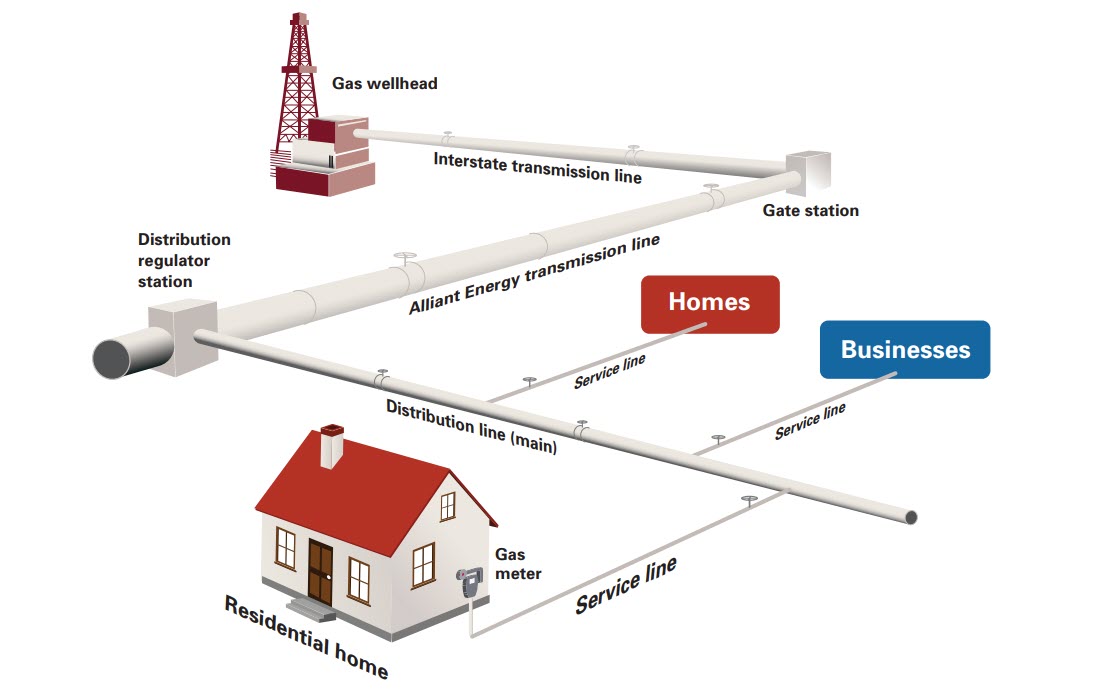
Unlike transmission pipelines, which are often mapped and monitored, local distribution networks are largely invisible.
Yet these are the lines that run directly beneath homes, schools, and streets.
The Missing Layer: Consumer Awareness
One of the most striking aspects of natural gas safety is how little visibility homeowners have into the infrastructure beneath them.
Most residents:
Do not know where pipelines run
Cannot detect underground leaks
Rely entirely on utilities for safety
Even the smell of gas—mercaptan—can fail:
It can dissipate or weaken in soil
Some individuals cannot detect it
Odor fade can occur before gas reaches homes
In Centreville, despite odor reports, the situation escalated into a full-scale explosion.
Early Detection: The Last Line of Defense
The Centreville explosion reinforces a critical reality:
Time is the only advantage in a gas leak scenario.
Traditional residential gas detectors:
Often trigger at 20–25% of LEL
May be installed near floor-level outlets
But natural gas:
Accumulates near ceilings
Can reach dangerous levels before detection
Advanced detection systems that:
Trigger at lower thresholds (e.g., 10% LEL)
Are mounted higher on walls
can provide valuable additional minutes for evacuation.
In fast-moving leak scenarios, those minutes can mean the difference between:
Safe evacuation
Catastrophic loss
A National Issue Playing Out Locally
The Centreville explosion is not an isolated anomaly—it reflects broader trends across U.S. infrastructure:
Increasing stress on pipeline systems
Expansion of suburban gas networks
Limited public awareness of underground risks
Even as utilities invest in modernization, the system remains:
Complex
Distributed
Vulnerable to localized failure
Conclusion: Lessons From Quail Pond Court
The events in Centreville offer a clear and sobering lesson.
This was not a sudden, unpredictable disaster. It was a slow-developing failure with warning signs that unfolded over hours.
A known gas leak
A dangerous classification
Active repair efforts
No evacuation
Delayed shutdown
The result: a home destroyed and a neighborhood disrupted.
For homeowners, urban planners, and infrastructure professionals, the takeaway is clear:
Natural gas systems are reliable—until they aren’t. And when they fail, they fail fast.
The Centreville explosion should serve as a wake-up call—not just for one Virginia neighborhood, but for every community built on top of unseen energy infrastructure.
Because the next leak won’t announce itself with a headline.
And the next explosion may not end with only minor injuries.
The safety of living near fracking (hydraulic fracturing) operations is a complex and debated topic. While fracking has been widely used to extract natural gas and oil, there are concerns regarding potential risks to human health and the environment.
Methane Leak Detection: The Hidden Danger Beneath Homes and Cities
Methane (CH₄) is colorless, odorless, and invisible to the human eye—but it’s one of the most dangerous gases silently moving beneath our feet. It’s a major contributor to global warming, and when it seeps into homes, it becomes a potential explosion hazard. Cities like Los Angeles, Boston, and New York have learned the hard way that methane isn’t just an environmental issue—it’s a public safety crisis.
The image above shows what many residents near oil and gas sites can’t see: methane leaking from a well casing, rising through fissures, contaminating aquifers, and entering the foundations of homes. Across the U.S., this scenario isn’t hypothetical—it’s happening in real neighborhoods right now.
Methane’s Double Threat: Climate and Safety
Methane is 84 times more potent than carbon dioxide in trapping heat over a 20-year period. When leaked from wells, pipelines, or storage facilities, it accelerates global warming. But methane’s second threat hits much closer to home: explosions and health risks.
The gas can accumulate in basements, crawl spaces, or utility rooms, igniting with the slightest spark. That’s why major cities—especially those near old oil fields or aging gas infrastructure—now require methane detectors in homes and buildings.
Where Methane Leaks Are a Growing Problem
Los Angeles, California: Living on a Methane Zone
Los Angeles sits atop ancient oil formations, and methane naturally seeps through the soil. The city has formally designated “Methane Hazard Zones” where new buildings must include methane barriers, venting systems, and gas detection alarms.
The 2015 Aliso Canyon gas leak in Porter Ranch brought national attention to the issue. Over 100,000 tons of methane spewed from a storage facility for nearly four months, forcing 8,000 families to evacuate. Residents reported headaches, nosebleeds, and nausea—symptoms linked to exposure from volatile organic compounds (VOCs) released alongside methane.
Since then, Los Angeles has adopted one of the most rigorous methane monitoring programs in the world. Every new construction in a Methane Zone must include an approved detection system to continuously monitor underground gas levels and trigger alarms when concentrations rise.
Boston, Massachusetts: The Aging Gas Grid
In Boston, the problem isn’t natural seeps—it’s leaky infrastructure. The city’s gas distribution network includes thousands of cast-iron pipes that date back to the early 1900s. Studies by Boston University found over 3,000 active methane leaks under city streets.
Many of these are slow leaks—not immediately explosive—but they contribute massively to greenhouse gas emissions and can create dangerous conditions in basements and utility conduits. Utilities have since accelerated replacement programs, but the backlog remains huge.
In response, Massachusetts communities are urging residents to install methane detectors and support state funding for “leak-prone pipe” replacement. Environmental groups are also pushing for greater transparency in leak maps, showing which neighborhoods face the highest risks.
Pennsylvania and Appalachia: Abandoned Wells That Won’t Die
Pennsylvania is home to hundreds of thousands of abandoned oil and gas wells, many drilled before modern regulations existed. Without proper sealing, these old wells become methane vents, leaking gas into soil, groundwater, and occasionally, nearby homes.
Researchers have documented methane bubbling up in backyards and contaminating private water wells. Some wells emit continuously for decades. The state and federal governments have begun plugging projects, but experts estimate there could be millions of undocumented wells across the U.S.
In rural Pennsylvania, homeowners are increasingly encouraged to use methane detectors in basements and well-water monitoring kits to detect contamination.
Four Corners Region: The “Methane Hotspot”
Between New Mexico, Colorado, Utah, and Arizona lies a massive methane cloud, first detected by NASA satellites in 2014. Known as the Four Corners Methane Hotspot, it represents one of the largest methane anomalies on the planet.
The source? A mix of coalbed methane extraction, oil operations, and natural seepage. Continuous aircraft surveys have since confirmed that small leaks across thousands of wells combine into a regional plume visible from space.
This discovery led to a global shift in monitoring—proving that satellites could identify methane “super-emitters” and hold companies accountable for emissions once invisible to regulators.
Landfills: Suburban Gas Migration
Even outside the oil industry, methane can be a danger. Landfills naturally produce methane as organic waste decomposes. Modern facilities install gas capture systems, but leaks still occur—especially from older, unlined sites.
In several U.S. communities, methane from landfills has migrated laterally through the ground into nearby neighborhoods. In rare cases, homes have been evacuated when indoor gas levels reached explosive concentrations.
States like California and Florida now require continuous methane monitoring for developments built within proximity of old or active landfill sites.
Why Homes Now Have Methane Detectors
1. Explosion Prevention
Natural gas utilities add an odorant called mercaptan to help people smell leaks, but it can fade or go unnoticed. Methane detectors alert homeowners before concentrations become dangerous, especially at night or in unoccupied spaces.
Cities like Los Angeles and New York require alarms in methane-prone zones and apartment buildings. The detectors sound when gas reaches roughly 10% of the lower explosive limit (LEL)—well before ignition danger.
2. Underground Migration
Methane can travel long distances underground. It doesn’t always leak from a broken pipe—it can migrate through fissures, abandoned well casings, or utility conduits. That’s why building codes in methane zones call for foundation-level sensors rather than ceiling-mounted ones.
In neighborhoods near refineries, oil fields, or former gas storage sites, detectors provide an essential safeguard when subsurface leaks are suspected.
3. Aging Urban Infrastructure
Older cities like Boston, Philadelphia, and New York have century-old cast-iron mains that are notoriously prone to cracking. Even after partial upgrades, small leaks persist.
Methane detectors act as a final layer of protection for residents living near these buried lines, particularly in basements, kitchens, and laundry rooms.
4. Local Building Codes and Laws
After years of leaks and explosions, some cities have made methane detection mandatory.
New York City’s Local Law 157 (2016) requires every apartment or dwelling with gas service to have a natural gas detector installed within 10 feet of gas appliances.
Los Angeles Municipal Code (91.7100 Series) mandates methane mitigation systems, including alarms and venting for all new buildings in designated hazard zones.
Similar requirements are emerging in San Francisco, Chicago, and Dallas as municipalities adopt climate resilience and building safety ordinances.
5. Health and Environmental Concerns
Methane leaks often come with volatile organic compounds (VOCs) like benzene and toluene—known carcinogens. Prolonged exposure to low-level leaks can cause headaches, dizziness, or fatigue.
In addition, methane intrusion in groundwater can alter water chemistry and displace oxygen, creating explosive well water conditions. For rural homes near oil fields or abandoned wells, combining methane air detectors with water testing kits provides layered safety.
How Methane Is Detected
Detection technology has advanced rapidly in the last decade:
Optical Gas Imaging (OGI): infrared cameras visualize methane plumes around pipes, tanks, and valves.
Laser Methane Sensors: measure concentration through beam absorption—used on drones and mobile trucks.
Drone-Based Detection: Equipped with miniaturized infrared or laser sensors, drones can fly over oil fields, refineries, and landfills to detect leaks from above. They’re ideal for hard-to-reach sites, abandoned wells, or rugged terrain, providing fast and cost-effective data collection without human exposure.
Continuous Monitoring Systems: networked sensors track methane levels around buildings and infrastructure in real time.
Satellite Systems: GHGSat and MethaneSAT now scan Earth daily, flagging emissions down to single-facility scale.
Even ordinary homeowners can now install plug-in methane detectors that sync with smartphones, providing instant alerts if gas levels rise.
Government Action and Accountability
The U.S. Environmental Protection Agency (EPA) and Department of Energy (DOE) have identified methane mitigation as a fast, cost-effective climate solution.
The 2024 EPA Methane Rule requires oil and gas operators to:
Conduct frequent leak detection and repair (LDAR) inspections
Report verified emissions data
Plug abandoned wells through new federal orphan-well programs
At the local level, Los Angeles County and New York City have already implemented stricter building codes and monitoring systems for methane-prone areas.
Globally, more than 150 countries have joined the Global Methane Pledge, committing to cut emissions 30% by 2030.
What Homeowners Can Do
Check if You’re in a Methane Zone: Los Angeles and other cities publish methane hazard maps. If your property lies within one, the installation of a detector may be required by law.
Install a Methane or Natural Gas Detector: Devices cost between $25–$100 and can be wall-mounted near stoves, furnaces, or basement walls.
Respond Immediately to Alarms or Odors: Leave the building, call your gas company or emergency services, and avoid flipping switches or lighting matches.
Test and Replace Detectors Regularly: Most detectors last 5–7 years. Regularly test functionality, especially if your home sits near a landfill, refinery, or old oil field.
Advocate for Transparency: Support open data policies requiring utilities to publish leak maps and inspection schedules.
Conclusion
Methane leaks represent an invisible but escalating danger that connects climate change, public health, and home safety. From Los Angeles’ methane zones to Boston’s century-old gas grid, the problem has become too widespread to ignore.
What was once a hidden environmental issue is now a household concern—literally. Methane detectors are no longer just for industrial sites; they’re becoming as essential as smoke or carbon monoxide alarms.
With modern sensors, drones, satellites, and local ordinances, the invisible is finally visible. Detecting methane early means saving lives, protecting homes, and cutting one of the most potent greenhouse gases driving our planet’s warming.
Smelling gas in or around your home is a serious safety concern. Whether it’s natural gas, propane, or methane from a nearby source like an abandoned oil well or pipeline, taking immediate action can save lives and prevent disasters.
Even a faint gas odor deserves your full attention. Leaks can lead to explosions, fires, or long-term health issues from chronic exposure. Stay safe, act fast, and know where to get help.
🔍 Related Searches People Are Asking:
What does natural gas smell like?
Can a gas leak kill you?
How far does gas travel underground?
Who to call for a gas smell outside?
Are abandoned oil wells dangerous?
Want to check if you're near a leaking well or old pipeline? Visit DrillingMaps.com to search your address and explore safety data near you.