

The Centreville Gas Explosion (2026): A Warning About America’s Hidden Pipeline Risks
A Quiet Suburb Turned Disaster Zone
At approximately 9:48 p.m., a powerful blast destroyed a single-family residence on Quail Pond Court, sending shockwaves through the surrounding community. Residents described the event as feeling like an earthquake or explosion, with windows shattering and homes shaking across the neighborhood.
Miraculously, despite the scale of destruction, only two minor injuries were reported. But the physical damage told a different story—one home completely obliterated, nearby structures severely damaged, and more than 46 homes evacuated as emergency crews rushed to secure the area.
While the immediate crisis captured headlines, the deeper story lies in what happened before the explosion—and what it reveals about systemic vulnerabilities in natural gas infrastructure.
A 12-Hour Warning That Went Unheeded
Investigators from the National Transportation Safety Board (NTSB) uncovered a critical detail: the explosion was not instantaneous or unpredictable.
Residents reported smelling gas as early as 10:28 a.m. that same day.
Utility crews later identified a “Grade 1” leak, the most severe classification, indicating an immediate hazard to life and property. This designation typically requires urgent action, including rapid repair and, in many cases, evacuation.
Yet, nearly 12 hours passed between the first reported gas odor and the eventual explosion.
During that time:
- Gas continued leaking into the environment
- Crews were actively working on the pipeline
- Homes remained occupied
This timeline exposes a dangerous reality:
even when a leak is known, the response window can fail to prevent disaster.
The Critical Failure Window: Detection vs. Action
The Centreville explosion highlights what safety experts often describe as the “failure window”—the period between identifying a leak and eliminating the risk.
In this case:
- The leak was confirmed
- Crews were dispatched
- Repairs were underway
But the neighborhood was not evacuated, and gas service remained active.
When the explosion occurred, it happened while crews were still attempting to fix the problem.
This raises a critical question for infrastructure safety:
If a leak is dangerous enough to classify as Grade 1, why are residents still inside their homes?
The Centreville incident demonstrates how quickly a “managed situation” can become catastrophic.
The Science Behind the Explosion: Gas Migration

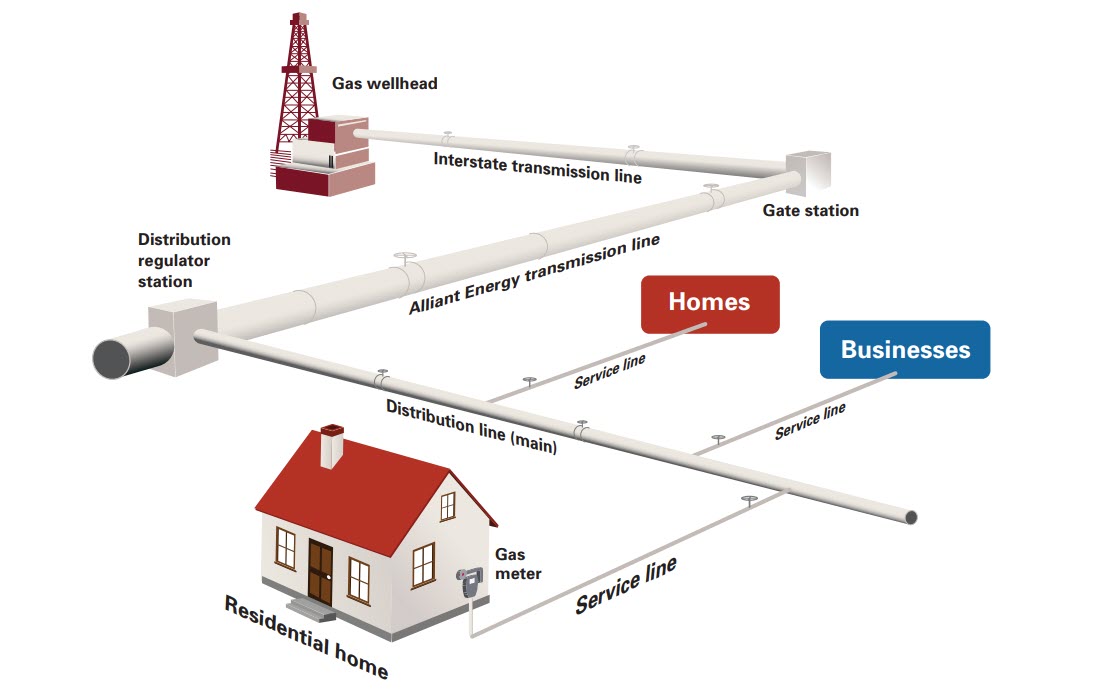
One of the most important—and least understood—factors in the Centreville explosion is how natural gas behaves once it escapes underground infrastructure.
Natural gas (primarily methane) is lighter than air, but when released underground, it does not simply rise and dissipate. Instead, it:
- Travels through porous soil
- Follows utility trenches and conduits
- Moves along pipe corridors and voids
- Enters homes through foundation cracks and basements
Investigators confirmed that gas in Centreville was detected:
- Underground in yards
- Along pipeline pathways
- Inside multiple nearby homes
This phenomenon—known as gas migration—means the source of a leak may not be where the explosion ultimately occurs.
Once inside a structure, natural gas rises and accumulates near ceilings and attic spaces, creating a highly combustible environment.
The Lower Explosive Limit: A Ticking Clock
The danger of natural gas is defined by its Lower Explosive Limit (LEL).
For methane:
- LEL ≈ 5% concentration in air
Once this threshold is reached:
- Any ignition source can trigger an explosion
- Light switches
- Appliances
- Static electricity
In Centreville, gas likely accumulated inside the home over several hours, gradually approaching this critical threshold.
The house effectively became a pressurized fuel chamber, waiting for a spark.
Infrastructure Failure: Not Just an “Old Pipe” Problem
Investigators traced the likely source of the leak to a 6-inch polyethylene gas main near Quail Pond Court and Belle Plains Drive.
This detail is critical.
Polyethylene pipes are considered modern infrastructure, widely used to replace older cast iron and steel systems. They are:
- Corrosion-resistant
- Flexible
- Designed for long-term durability
Yet in Centreville:
- The pipe failed pressure testing
- It could not maintain system integrity
- It required removal for further analysis
This underscores a key takeaway:
Pipeline risk is not limited to aging infrastructure—it exists even in newer systems.
Factors that can contribute to failure include:
- Ground shifting or settling
- Installation defects
- Stress cracking over time
- External environmental pressures
The Delayed Shutdown: A Systemic Risk
One of the most concerning aspects of the Centreville incident is what happened after the explosion.
Natural gas service to the area was not fully shut off until approximately 12:40 a.m., nearly three hours after the blast.
This delay highlights another critical vulnerability:
- System isolation is not always immediate
- Gas can continue flowing even after a catastrophic failure
For emergency responders and residents, this creates ongoing risk:
- Secondary explosions
- Continued gas migration
- Extended evacuation periods
The Real Impact: More Than One Home
While headlines focused on the destroyed house, the broader impact was far greater:
- 1 home completely destroyed
- Multiple homes structurally damaged
- 46 homes evacuated
- 50+ families displaced
- Gas service shut down across the neighborhood
For many residents, the disruption lasted over a week, with no access to heating or cooking gas while investigators worked to secure the system.
This illustrates an important point:
A single pipeline failure can disrupt an entire community.
Why Centreville Matters for DrillingMaps Readers
For readers of DrillingMaps.com—who track energy infrastructure, pipelines, and industrial risk—the Centreville explosion is more than a local story.
It is a case study in distribution-level failure, showing how:
- Small-diameter local pipelines can cause large-scale damage
- Suburban neighborhoods are not immune to energy risks
- Infrastructure visibility remains limited to the public
Unlike transmission pipelines, which are often mapped and monitored, local distribution networks are largely invisible.
Yet these are the lines that run directly beneath homes, schools, and streets.
The Missing Layer: Consumer Awareness
One of the most striking aspects of natural gas safety is how little visibility homeowners have into the infrastructure beneath them.
Most residents:
- Do not know where pipelines run
- Cannot detect underground leaks
- Rely entirely on utilities for safety
Even the smell of gas—mercaptan—can fail:
- It can dissipate or weaken in soil
- Some individuals cannot detect it
- Odor fade can occur before gas reaches homes
In Centreville, despite odor reports, the situation escalated into a full-scale explosion.
Early Detection: The Last Line of Defense
The Centreville explosion reinforces a critical reality:
Time is the only advantage in a gas leak scenario.
Traditional residential gas detectors:
- Often trigger at 20–25% of LEL
- May be installed near floor-level outlets
But natural gas:
- Accumulates near ceilings
- Can reach dangerous levels before detection
Advanced detection systems that:
- Trigger at lower thresholds (e.g., 10% LEL)
- Are mounted higher on walls
can provide valuable additional minutes for evacuation.
In fast-moving leak scenarios, those minutes can mean the difference between:
- Safe evacuation
- Catastrophic loss
A National Issue Playing Out Locally
The Centreville explosion is not an isolated anomaly—it reflects broader trends across U.S. infrastructure:
- Increasing stress on pipeline systems
- Expansion of suburban gas networks
- Limited public awareness of underground risks
Even as utilities invest in modernization, the system remains:
- Complex
- Distributed
- Vulnerable to localized failure
Conclusion: Lessons From Quail Pond Court
The events in Centreville offer a clear and sobering lesson.
This was not a sudden, unpredictable disaster. It was a slow-developing failure with warning signs that unfolded over hours.
- A known gas leak
- A dangerous classification
- Active repair efforts
- No evacuation
- Delayed shutdown
The result: a home destroyed and a neighborhood disrupted.
For homeowners, urban planners, and infrastructure professionals, the takeaway is clear:
Natural gas systems are reliable—until they aren’t. And when they fail, they fail fast.
The Centreville explosion should serve as a wake-up call—not just for one Virginia neighborhood, but for every community built on top of unseen energy infrastructure.
Because the next leak won’t announce itself with a headline.
And the next explosion may not end with only minor injuries.