Syndicated Maps has recently launched a value-packed bundled subscription that gives users access to all 22 of its niche maps for just $9.95 per month—a savings of over 50% compared to subscribing individually. This all-access plan was created in response to user demand for a more affordable way to explore multiple data layers across traffic enforcement, environmental hazards, wireless coverage, energy infrastructure, and public safety. Whether you're a researcher, commuter, traveler, or concerned homeowner, this bundle lets you seamlessly tap into detailed, location-based intelligence from across the entire network.
Each map serves a specific purpose—from helping drivers avoid speed traps to alerting families about nearby environmental hazards. The Syndicated Maps network has earned the trust of millions of users annually, including commuters, journalists, health professionals, and urban planners.
Why Subscribe to DrillingMaps.com?
Are you in the oil and gas industry and prioritize safety and compliance? Are you looking to move to a new residential location and want to learn about a particular area that might have oil and gas drilling in the neighborhood? DrillingMaps.com offers a comprehensive Health and Safety Map Database that ensures you stay informed and compliant at all times. Here’s why subscribing to our service makes perfect sense:
1. Comprehensive Coverage: Our Health and Safety Map Database provides extensive coverage of drilling sites, ensuring you have access to crucial safety information wherever your business operations or residencies take you.
2. Real-Time Updates: Stay ahead with real-time updates on regulatory changes and safety measures relevant to your operations. Our database is constantly updated to reflect the latest information.
3. User-Friendly Interface: Easily navigate through our user-friendly interface designed for quick access to essential safety data. Find what you need efficiently and effectively by searching the map.
4. Cost-Effective Pricing: We believe safety shouldn’t come at a premium. Subscribe for just 0.03 cents per day or $1 per month to gain access to invaluable safety resources that protect your family and workforce.
5. Peace of Mind: With DrillingMaps.com, you can move to a new area and not wonder what might be going on that wasn't disclosed to you in the disclosures.
The Strait of Hormuz is the most critical energy corridor on the planet. Roughly 20% of the world’s oil supply and a significant portion of global liquefied natural gas (LNG) pass through this narrow waterway connecting the Persian Gulf to the open ocean.
For readers of blog.drillingmaps.com, this is more than geography—it’s the central artery of global energy logistics. What moves through this strait, who influences it, and whether ships can pass freely directly impacts oil prices, global trade, and economic stability.
What Is Being Shipped Through the Strait of Hormuz?
While crude oil dominates the headlines, the cargo mix is broader and strategically important.
Crude Oil (The Backbone of Global Energy)
The majority of traffic consists of crude oil exported from:
Saudi Arabia
Iraq
Kuwait
United Arab Emirates
Iran
These shipments are carried on massive tankers and are primarily headed to Asia, where demand from countries like China and India continues to rise.
Liquefied Natural Gas (LNG)
The Strait is equally vital for natural gas:
Qatar, one of the world’s largest LNG exporters, relies almost entirely on this route
LNG cargoes supply power grids in:
Japan
South Korea
China
Europe
Without Hormuz, a large portion of the global gas market would be disrupted.
Refined Fuels and Petrochemicals
In addition to raw resources, ships transport:
Gasoline
Diesel
Jet fuel
Plastics and chemical feedstocks
These products support transportation systems, aviation, and manufacturing worldwide.
Why This Narrow Passage Matters So Much
The Strait of Hormuz is a true chokepoint:
The Persian Gulf has no alternative ocean exit
Pipelines can bypass only a small percentage of exports
Ships must pass through a tight, highly controlled corridor
That means any disruption—even temporary—can ripple across the global economy.
Does Iran Control the Strait of Hormuz?
Legally: No
Under international law:
The Strait is considered an international transit passage
Ships have the right to pass through without interference
In Practice: Iran Has Significant Influence
Iran’s power comes from:
Its geographic position along the northern coast
The narrowness of the shipping lanes
Its ability to monitor and potentially disrupt traffic
For over 40 years (since the 1979 Iranian Revolution), Iran has used this position as leverage in geopolitical conflicts.
👉 Iran doesn’t need to “own” the Strait—it only needs the ability to slow, threaten, or control access.
Why Would a Country Charge a Fee to Pass Through?
This is where things get interesting—and controversial.
1. Revenue Generation (Like a Toll Road at Sea)
If a country can exert control over a chokepoint, it may attempt to charge:
Transit fees
Security escort fees
“Administrative” clearance costs
This is similar in concept to major canals like the Suez Canal or Panama Canal, where ships legally pay to pass.
👉 The difference: Those canals are man-made and internationally recognized toll routes, while the Strait of Hormuz is a natural waterway with protected passage rights.
2. Security Justification
A country might argue:
It is providing military protection or escort services
Fees cover:
Naval patrols
Mine clearing
Monitoring and safety
In unstable regions, shipping companies sometimes accept these costs as part of risk management.
3. Political Leverage
Charging fees can also be a strategic move:
Pressure rival nations
Retaliate against sanctions
Signal control over global trade routes
👉 It becomes less about money—and more about power and influence
4. De Facto Control vs Legal Control
Even if international law prohibits tolls:
A country with military dominance can create a “pay-to-pass” environment
Ships may comply simply to avoid:
Delays
Harassment
Seizure risks
This is sometimes referred to as informal or coercive tolling
What Happens When Fees or Restrictions Are Imposed?
If ships are forced to pay—or fear disruption—the effects are immediate:
Higher Costs for Everyone
Shipping insurance premiums spike
Freight costs increase
Oil prices rise globally
Reduced Traffic
Some ships may:
Delay voyages
Reroute (if possible)
Reduce cargo volumes
Global Economic Impact
Because so much energy flows through Hormuz:
Gas prices increase worldwide
Airlines and logistics companies face higher fuel costs
Inflation spreads across economies
👉 A “fee” at Hormuz doesn’t stay local—it affects the entire world.
Where Ships Are Going
Typical routes through the Strait include:
Outbound (from the Persian Gulf):
Oil and LNG leaving Saudi Arabia, UAE, Iraq, Kuwait, and Qatar
Inbound (to global markets):
Asia (China, India, Japan, South Korea)
Europe (smaller share)
Asia alone receives the majority of these shipments, making it highly sensitive to disruptions.
Is There Recreational Boating in the Strait?
Very little.
Why?
Heavy tanker traffic
Military presence
Narrow navigation lanes
Ongoing geopolitical tension
This is not a leisure boating destination—it is a high-risk industrial shipping corridor.
Nearby Boating Activity
Recreational boating exists in:
UAE (Dubai, Abu Dhabi)
Oman (Muscat)
These areas offer marinas and yachting, but they are outside the core transit zone of the Strait.
How SlipMaps.com Connects to This Region
Even in a region dominated by oil tankers, platforms like SlipMaps.com provide valuable insight.
What SlipMaps Tracks
Global marinas
Ports and harbors
Coastal infrastructure
Why It Matters
Ports in the Gulf serve multiple roles (energy, cargo, local transport)
Mapping tools help visualize how global shipping networks connect
Users can explore where commercial and recreational maritime worlds intersect
👉 While Hormuz is dominated by energy transport, SlipMaps highlights the broader maritime ecosystem around it.
Final Takeaway
The Strait of Hormuz matters because:
It carries a massive share of the world’s oil and LNG
It is the only viable export route for much of the Middle East
Iran has held strategic influence for over 40 years
Any disruption—or attempt to charge passage fees—can shake global markets
And most importantly:
👉 If a country can influence a chokepoint like Hormuz, it doesn’t just control a waterway—it gains leverage over global energy, trade, and economics.
Natural gas powers millions of homes, businesses, and industrial facilities across the United States and globally. But while it’s efficient and widely used, it also presents a hidden risk: methane leaks can accumulate silently and ignite with devastating consequences.
Unlike smoke detectors or carbon monoxide alarms, natural gas detectors are not universally required—yet. However, that is rapidly changing as cities, states, and countries respond to explosions, infrastructure aging, and environmental concerns.
This guide breaks down:
Where natural gas detectors are required
Why certain regions are adopting them faster
How the technology works
The best natural gas detectors on the market
What Is a Natural Gas Alarm?
A natural gas alarm (or methane detector) is a device designed to:
Detect methane (CH₄), the primary component of natural gas
Trigger an audible (and sometimes digital) alert
Warn occupants before gas reaches dangerous levels
Most devices are calibrated to alarm well below the Lower Explosive Limit (LEL)—typically between 10–25% of LEL—to provide early warning.
Think of them as the “smoke detectors of gas leaks”—but for an invisible, odorless threat.
Why Natural Gas Detectors Are Not Yet Universal
Unlike smoke or carbon monoxide alarms, gas detection is more complex:
Hundreds of gases exist with different behaviors
Some rise (methane), others sink (propane)
Detection thresholds vary widely
Because of this, regulations focus on air quality and risk management rather than mandating specific devices.
Still, agencies like the National Transportation Safety Board (NTSB) strongly recommend installing them in homes and buildings.
Where Natural Gas Detectors Are Required (or Emerging)
1. New York City (Leading the U.S.)
New York City is the most aggressive adopter:
Local Law 157 requires natural gas detectors in all residential buildings
Compliance deadline: May 1, 2025
Applies to apartments, condos, hotels, and houses
Must meet NFPA 715 standards
Placement rules include:
Within 10 feet of gas appliances
Near sleeping areas
NYC’s push came after multiple fatal gas explosions in the 2010s.
2. New York State (Expanding Statewide)
New York is considering broader legislation requiring:
Gas detectors in all dwellings
Connectivity to gas utilities for reporting leaks
This reflects a shift toward smart infrastructure and real-time leak monitoring.
3. Maine & Northeast States
Some Northeast states have already enacted laws:
Detectors required in rooms with gas appliances
Expanding to commercial buildings by 2026
These regions share common traits:
Older housing stock
Cold climates with heavy gas usage
Dense urban environments
4. California (Recommended, Not Required)
In California:
Not legally required statewide (yet)
Strongly recommended by utilities like PG&E
Driven by wildfire risk and infrastructure concerns
The state has experienced high-profile gas explosions, including the San Bruno disaster, which increased awareness.
5. Europe (Regulation Driven by Emissions & Safety)
Europe is rapidly advancing methane detection due to:
EU Methane Regulation (2025) requiring emissions monitoring
Leak Detection and Repair (LDAR) programs
Focus on climate impact of methane
Modern detectors are now used for:
Utility infrastructure monitoring
Industrial compliance
Residential safety in some countries
6. Monaco & Select European Regions
Some regions mandate gas-related detection devices:
Monaco requires detectors in homes connected to gas systems
Across Europe, adoption is often tied to:
Insurance requirements
Building codes
Environmental policy
Why Certain Regions Adopt Faster
1. Urban Density
Cities like NYC:
High-rise buildings
Shared gas lines
Greater risk of multi-unit explosions
2. Aging Infrastructure
Older pipelines increase leak probability:
Northeast U.S.
Historic European cities
3. Cold Weather Dependence
Regions relying heavily on gas heating:
Northeast U.S.
Northern Europe
4. Regulatory Pressure
Europe leads due to:
Climate mandates
Methane emissions tracking
5. History of Explosions
Major incidents often trigger legislation:
NYC (2014–2015 explosions)
California (San Bruno)
How Natural Gas Detectors Work
Most residential and commercial detectors use:
Sensor Types
Semiconductor (MOS): Common in home devices
Infrared (NDIR): More accurate, used in industrial settings
Electrochemical: For toxic gases
Detection Process
Air is sampled continuously
Methane concentration is measured
Alarm triggers when threshold is reached
Alarm Thresholds
Typically set below explosion risk (10–25% LEL)
Top Natural Gas Leak Detectors (2026 Comparison)
Below are some of the most popular and widely used residential and commercial detectors.
Best Overall: DeNova Detect Gas Alarm (NYC-Compliant)
Why it stands out:
10-year battery life
Fully compliant with NYC Local Law 157
No wiring required
UL-certified (UL1484)
Best for:
Apartments and rental compliance
Landlords and property managers
Best Plug-In Detector: Kidde Nighthawk
Features:
Plug-in with battery backup
Digital display
Trusted brand in fire safety
Best for:
Homeowners wanting simple installation
Best Budget Option: EG Air Detector
Features:
Affordable
Dual detection (methane + propane)
Loud alarm system
Best for:
Basic residential safety
Best Portable Detector: Techamor Y201
Features:
Handheld
Flexible probe
Used for inspections and leak detection
Best for:
Contractors and inspectors
Product Comparison Table
Feature
DeNova Detect
Kidde Nighthawk
EG Air Detector
Techamor Y201
Power Source
Battery (10-year)
Plug-in + battery
Plug-in
Rechargeable
Installation
Wall-mounted
Outlet
Outlet
Portable
Compliance
NYC LL157
General use
General use
Industrial
Best Use
Apartments
Homes
Budget homes
Leak inspections
Smart Features
Limited
Digital display
Basic
Advanced sensing
Where to Install Natural Gas Detectors
According to NFPA 715 guidelines:
Within 12 inches of the ceiling (for methane)
In every room with gas appliances
Near sleeping areas
Not directly next to vents or windows
Proper placement is critical—methane rises, so ceiling-level detection is key.
Benefits of Installing Gas Leak Detectors
1. Prevent Explosions
Gas buildup can ignite with a single spark.
2. Early Warning Saves Lives
Detectors alert occupants before dangerous levels accumulate.
3. Property Protection
Leaks can cause:
Structural damage
Fires
Insurance claims
4. Regulatory Compliance
Increasingly required in:
NYC
Northeast states
Europe
5. Smart Monitoring Integration
Modern detectors can:
Send mobile alerts
Connect to utilities
Enable remote monitoring
The Future of Natural Gas Detection
The industry is moving toward:
Smart Infrastructure
Utility-connected detectors
Real-time leak reporting
Environmental Monitoring
Methane tracking for climate compliance
Integration with emissions reporting
Mandatory Adoption
Expect wider mandates across:
California
Major U.S. cities
EU countries
Final Thoughts
Natural gas alarms are quickly evolving from optional safety devices to essential infrastructure tools.
While not yet universally required, the trend is clear:
Urban areas are leading adoption
Regulations are expanding
Technology is improving rapidly
For homeowners, landlords, and businesses, installing a natural gas detector is no longer just a precaution—it’s becoming a standard layer of protection in a world increasingly aware of invisible risks.
The Centreville Gas Explosion (2026): A Warning About America’s Hidden Pipeline Risks
A Quiet Suburb Turned Disaster Zone
On the night of February 15, 2026, the Belle Pond Farm neighborhood in Centreville was rocked by a devastating natural gas explosion that leveled a home and forced dozens of families to evacuate.
At approximately 9:48 p.m., a powerful blast destroyed a single-family residence on Quail Pond Court, sending shockwaves through the surrounding community. Residents described the event as feeling like an earthquake or explosion, with windows shattering and homes shaking across the neighborhood.
Miraculously, despite the scale of destruction, only two minor injuries were reported. But the physical damage told a different story—one home completely obliterated, nearby structures severely damaged, and more than 46 homes evacuated as emergency crews rushed to secure the area.
While the immediate crisis captured headlines, the deeper story lies in what happened before the explosion—and what it reveals about systemic vulnerabilities in natural gas infrastructure.
A 12-Hour Warning That Went Unheeded
Investigators from the National Transportation Safety Board (NTSB) uncovered a critical detail: the explosion was not instantaneous or unpredictable.
Residents reported smelling gas as early as 10:28 a.m. that same day.
Utility crews later identified a “Grade 1” leak, the most severe classification, indicating an immediate hazard to life and property. This designation typically requires urgent action, including rapid repair and, in many cases, evacuation.
Yet, nearly 12 hours passed between the first reported gas odor and the eventual explosion.
During that time:
Gas continued leaking into the environment
Crews were actively working on the pipeline
Homes remained occupied
This timeline exposes a dangerous reality: even when a leak is known, the response window can fail to prevent disaster.
The Critical Failure Window: Detection vs. Action
The Centreville explosion highlights what safety experts often describe as the “failure window”—the period between identifying a leak and eliminating the risk.
In this case:
The leak was confirmed
Crews were dispatched
Repairs were underway
But the neighborhood was not evacuated, and gas service remained active.
When the explosion occurred, it happened while crews were still attempting to fix the problem.
This raises a critical question for infrastructure safety:
If a leak is dangerous enough to classify as Grade 1, why are residents still inside their homes?
The Centreville incident demonstrates how quickly a “managed situation” can become catastrophic.
The Science Behind the Explosion: Gas Migration
One of the most important—and least understood—factors in the Centreville explosion is how natural gas behaves once it escapes underground infrastructure.
Natural gas (primarily methane) is lighter than air, but when released underground, it does not simply rise and dissipate. Instead, it:
Travels through porous soil
Follows utility trenches and conduits
Moves along pipe corridors and voids
Enters homes through foundation cracks and basements
Investigators confirmed that gas in Centreville was detected:
Underground in yards
Along pipeline pathways
Inside multiple nearby homes
This phenomenon—known as gas migration—means the source of a leak may not be where the explosion ultimately occurs.
Once inside a structure, natural gas rises and accumulates near ceilings and attic spaces, creating a highly combustible environment.
The Lower Explosive Limit: A Ticking Clock
The danger of natural gas is defined by its Lower Explosive Limit (LEL).
For methane:
LEL ≈ 5% concentration in air
Once this threshold is reached:
Any ignition source can trigger an explosion
Light switches
Appliances
Static electricity
In Centreville, gas likely accumulated inside the home over several hours, gradually approaching this critical threshold.
The house effectively became a pressurized fuel chamber, waiting for a spark.
Infrastructure Failure: Not Just an “Old Pipe” Problem
Investigators traced the likely source of the leak to a 6-inch polyethylene gas main near Quail Pond Court and Belle Plains Drive.
This detail is critical.
Polyethylene pipes are considered modern infrastructure, widely used to replace older cast iron and steel systems. They are:
Corrosion-resistant
Flexible
Designed for long-term durability
Yet in Centreville:
The pipe failed pressure testing
It could not maintain system integrity
It required removal for further analysis
This underscores a key takeaway:
Pipeline risk is not limited to aging infrastructure—it exists even in newer systems.
Factors that can contribute to failure include:
Ground shifting or settling
Installation defects
Stress cracking over time
External environmental pressures
The Delayed Shutdown: A Systemic Risk
One of the most concerning aspects of the Centreville incident is what happened after the explosion.
Natural gas service to the area was not fully shut off until approximately 12:40 a.m., nearly three hours after the blast.
This delay highlights another critical vulnerability:
System isolation is not always immediate
Gas can continue flowing even after a catastrophic failure
For emergency responders and residents, this creates ongoing risk:
Secondary explosions
Continued gas migration
Extended evacuation periods
The Real Impact: More Than One Home
While headlines focused on the destroyed house, the broader impact was far greater:
1 home completely destroyed
Multiple homes structurally damaged
46 homes evacuated
50+ families displaced
Gas service shut down across the neighborhood
For many residents, the disruption lasted over a week, with no access to heating or cooking gas while investigators worked to secure the system.
This illustrates an important point:
A single pipeline failure can disrupt an entire community.
Why Centreville Matters for DrillingMaps Readers
For readers of DrillingMaps.com—who track energy infrastructure, pipelines, and industrial risk—the Centreville explosion is more than a local story.
It is a case study in distribution-level failure, showing how:
Small-diameter local pipelines can cause large-scale damage
Suburban neighborhoods are not immune to energy risks
Infrastructure visibility remains limited to the public
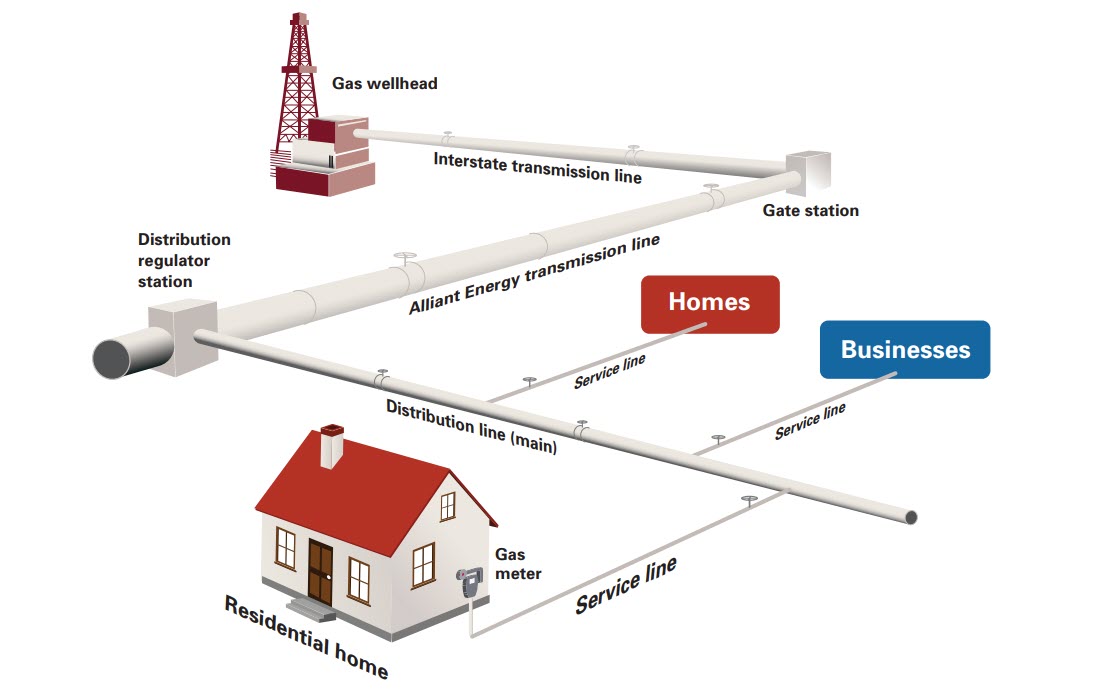
Unlike transmission pipelines, which are often mapped and monitored, local distribution networks are largely invisible.
Yet these are the lines that run directly beneath homes, schools, and streets.
The Missing Layer: Consumer Awareness
One of the most striking aspects of natural gas safety is how little visibility homeowners have into the infrastructure beneath them.
Most residents:
Do not know where pipelines run
Cannot detect underground leaks
Rely entirely on utilities for safety
Even the smell of gas—mercaptan—can fail:
It can dissipate or weaken in soil
Some individuals cannot detect it
Odor fade can occur before gas reaches homes
In Centreville, despite odor reports, the situation escalated into a full-scale explosion.
Early Detection: The Last Line of Defense
The Centreville explosion reinforces a critical reality:
Time is the only advantage in a gas leak scenario.
Traditional residential gas detectors:
Often trigger at 20–25% of LEL
May be installed near floor-level outlets
But natural gas:
Accumulates near ceilings
Can reach dangerous levels before detection
Advanced detection systems that:
Trigger at lower thresholds (e.g., 10% LEL)
Are mounted higher on walls
can provide valuable additional minutes for evacuation.
In fast-moving leak scenarios, those minutes can mean the difference between:
Safe evacuation
Catastrophic loss
A National Issue Playing Out Locally
The Centreville explosion is not an isolated anomaly—it reflects broader trends across U.S. infrastructure:
Increasing stress on pipeline systems
Expansion of suburban gas networks
Limited public awareness of underground risks
Even as utilities invest in modernization, the system remains:
Complex
Distributed
Vulnerable to localized failure
Conclusion: Lessons From Quail Pond Court
The events in Centreville offer a clear and sobering lesson.
This was not a sudden, unpredictable disaster. It was a slow-developing failure with warning signs that unfolded over hours.
A known gas leak
A dangerous classification
Active repair efforts
No evacuation
Delayed shutdown
The result: a home destroyed and a neighborhood disrupted.
For homeowners, urban planners, and infrastructure professionals, the takeaway is clear:
Natural gas systems are reliable—until they aren’t. And when they fail, they fail fast.
The Centreville explosion should serve as a wake-up call—not just for one Virginia neighborhood, but for every community built on top of unseen energy infrastructure.
Because the next leak won’t announce itself with a headline.
And the next explosion may not end with only minor injuries.
Oil and gas exploration and drilling are essential components of the global energy industry. However, for homeowners and residents living near potential drilling sites, the question of how close oil and gas companies can drill to their homes is a matter of concern. In this article, we will explore the factors that influence drilling proximity, including regulations, well types, and environmental considerations.
Methane Leak Detection: The Hidden Danger Beneath Homes and Cities
Methane (CH₄) is colorless, odorless, and invisible to the human eye—but it’s one of the most dangerous gases silently moving beneath our feet. It’s a major contributor to global warming, and when it seeps into homes, it becomes a potential explosion hazard. Cities like Los Angeles, Boston, and New York have learned the hard way that methane isn’t just an environmental issue—it’s a public safety crisis.
The image above shows what many residents near oil and gas sites can’t see: methane leaking from a well casing, rising through fissures, contaminating aquifers, and entering the foundations of homes. Across the U.S., this scenario isn’t hypothetical—it’s happening in real neighborhoods right now.
Methane’s Double Threat: Climate and Safety
Methane is 84 times more potent than carbon dioxide in trapping heat over a 20-year period. When leaked from wells, pipelines, or storage facilities, it accelerates global warming. But methane’s second threat hits much closer to home: explosions and health risks.
The gas can accumulate in basements, crawl spaces, or utility rooms, igniting with the slightest spark. That’s why major cities—especially those near old oil fields or aging gas infrastructure—now require methane detectors in homes and buildings.
Where Methane Leaks Are a Growing Problem
Los Angeles, California: Living on a Methane Zone
Los Angeles sits atop ancient oil formations, and methane naturally seeps through the soil. The city has formally designated “Methane Hazard Zones” where new buildings must include methane barriers, venting systems, and gas detection alarms.
The 2015 Aliso Canyon gas leak in Porter Ranch brought national attention to the issue. Over 100,000 tons of methane spewed from a storage facility for nearly four months, forcing 8,000 families to evacuate. Residents reported headaches, nosebleeds, and nausea—symptoms linked to exposure from volatile organic compounds (VOCs) released alongside methane.
Since then, Los Angeles has adopted one of the most rigorous methane monitoring programs in the world. Every new construction in a Methane Zone must include an approved detection system to continuously monitor underground gas levels and trigger alarms when concentrations rise.
Boston, Massachusetts: The Aging Gas Grid
In Boston, the problem isn’t natural seeps—it’s leaky infrastructure. The city’s gas distribution network includes thousands of cast-iron pipes that date back to the early 1900s. Studies by Boston University found over 3,000 active methane leaks under city streets.
Many of these are slow leaks—not immediately explosive—but they contribute massively to greenhouse gas emissions and can create dangerous conditions in basements and utility conduits. Utilities have since accelerated replacement programs, but the backlog remains huge.
In response, Massachusetts communities are urging residents to install methane detectors and support state funding for “leak-prone pipe” replacement. Environmental groups are also pushing for greater transparency in leak maps, showing which neighborhoods face the highest risks.
Pennsylvania and Appalachia: Abandoned Wells That Won’t Die
Pennsylvania is home to hundreds of thousands of abandoned oil and gas wells, many drilled before modern regulations existed. Without proper sealing, these old wells become methane vents, leaking gas into soil, groundwater, and occasionally, nearby homes.
Researchers have documented methane bubbling up in backyards and contaminating private water wells. Some wells emit continuously for decades. The state and federal governments have begun plugging projects, but experts estimate there could be millions of undocumented wells across the U.S.
In rural Pennsylvania, homeowners are increasingly encouraged to use methane detectors in basements and well-water monitoring kits to detect contamination.
Four Corners Region: The “Methane Hotspot”
Between New Mexico, Colorado, Utah, and Arizona lies a massive methane cloud, first detected by NASA satellites in 2014. Known as the Four Corners Methane Hotspot, it represents one of the largest methane anomalies on the planet.
The source? A mix of coalbed methane extraction, oil operations, and natural seepage. Continuous aircraft surveys have since confirmed that small leaks across thousands of wells combine into a regional plume visible from space.
This discovery led to a global shift in monitoring—proving that satellites could identify methane “super-emitters” and hold companies accountable for emissions once invisible to regulators.
Landfills: Suburban Gas Migration
Even outside the oil industry, methane can be a danger. Landfills naturally produce methane as organic waste decomposes. Modern facilities install gas capture systems, but leaks still occur—especially from older, unlined sites.
In several U.S. communities, methane from landfills has migrated laterally through the ground into nearby neighborhoods. In rare cases, homes have been evacuated when indoor gas levels reached explosive concentrations.
States like California and Florida now require continuous methane monitoring for developments built within proximity of old or active landfill sites.
Why Homes Now Have Methane Detectors
1. Explosion Prevention
Natural gas utilities add an odorant called mercaptan to help people smell leaks, but it can fade or go unnoticed. Methane detectors alert homeowners before concentrations become dangerous, especially at night or in unoccupied spaces.
Cities like Los Angeles and New York require alarms in methane-prone zones and apartment buildings. The detectors sound when gas reaches roughly 10% of the lower explosive limit (LEL)—well before ignition danger.
2. Underground Migration
Methane can travel long distances underground. It doesn’t always leak from a broken pipe—it can migrate through fissures, abandoned well casings, or utility conduits. That’s why building codes in methane zones call for foundation-level sensors rather than ceiling-mounted ones.
In neighborhoods near refineries, oil fields, or former gas storage sites, detectors provide an essential safeguard when subsurface leaks are suspected.
3. Aging Urban Infrastructure
Older cities like Boston, Philadelphia, and New York have century-old cast-iron mains that are notoriously prone to cracking. Even after partial upgrades, small leaks persist.
Methane detectors act as a final layer of protection for residents living near these buried lines, particularly in basements, kitchens, and laundry rooms.
4. Local Building Codes and Laws
After years of leaks and explosions, some cities have made methane detection mandatory.
New York City’s Local Law 157 (2016) requires every apartment or dwelling with gas service to have a natural gas detector installed within 10 feet of gas appliances.
Los Angeles Municipal Code (91.7100 Series) mandates methane mitigation systems, including alarms and venting for all new buildings in designated hazard zones.
Similar requirements are emerging in San Francisco, Chicago, and Dallas as municipalities adopt climate resilience and building safety ordinances.
5. Health and Environmental Concerns
Methane leaks often come with volatile organic compounds (VOCs) like benzene and toluene—known carcinogens. Prolonged exposure to low-level leaks can cause headaches, dizziness, or fatigue.
In addition, methane intrusion in groundwater can alter water chemistry and displace oxygen, creating explosive well water conditions. For rural homes near oil fields or abandoned wells, combining methane air detectors with water testing kits provides layered safety.
How Methane Is Detected
Detection technology has advanced rapidly in the last decade:
Optical Gas Imaging (OGI): infrared cameras visualize methane plumes around pipes, tanks, and valves.
Laser Methane Sensors: measure concentration through beam absorption—used on drones and mobile trucks.
Drone-Based Detection: Equipped with miniaturized infrared or laser sensors, drones can fly over oil fields, refineries, and landfills to detect leaks from above. They’re ideal for hard-to-reach sites, abandoned wells, or rugged terrain, providing fast and cost-effective data collection without human exposure.
Continuous Monitoring Systems: networked sensors track methane levels around buildings and infrastructure in real time.
Satellite Systems: GHGSat and MethaneSAT now scan Earth daily, flagging emissions down to single-facility scale.
Even ordinary homeowners can now install plug-in methane detectors that sync with smartphones, providing instant alerts if gas levels rise.
Government Action and Accountability
The U.S. Environmental Protection Agency (EPA) and Department of Energy (DOE) have identified methane mitigation as a fast, cost-effective climate solution.
The 2024 EPA Methane Rule requires oil and gas operators to:
Conduct frequent leak detection and repair (LDAR) inspections
Report verified emissions data
Plug abandoned wells through new federal orphan-well programs
At the local level, Los Angeles County and New York City have already implemented stricter building codes and monitoring systems for methane-prone areas.
Globally, more than 150 countries have joined the Global Methane Pledge, committing to cut emissions 30% by 2030.
What Homeowners Can Do
Check if You’re in a Methane Zone: Los Angeles and other cities publish methane hazard maps. If your property lies within one, the installation of a detector may be required by law.
Install a Methane or Natural Gas Detector: Devices cost between $25–$100 and can be wall-mounted near stoves, furnaces, or basement walls.
Respond Immediately to Alarms or Odors: Leave the building, call your gas company or emergency services, and avoid flipping switches or lighting matches.
Test and Replace Detectors Regularly: Most detectors last 5–7 years. Regularly test functionality, especially if your home sits near a landfill, refinery, or old oil field.
Advocate for Transparency: Support open data policies requiring utilities to publish leak maps and inspection schedules.
Conclusion
Methane leaks represent an invisible but escalating danger that connects climate change, public health, and home safety. From Los Angeles’ methane zones to Boston’s century-old gas grid, the problem has become too widespread to ignore.
What was once a hidden environmental issue is now a household concern—literally. Methane detectors are no longer just for industrial sites; they’re becoming as essential as smoke or carbon monoxide alarms.
With modern sensors, drones, satellites, and local ordinances, the invisible is finally visible. Detecting methane early means saving lives, protecting homes, and cutting one of the most potent greenhouse gases driving our planet’s warming.
AI Sensors in the Oil and Gas Industry: Methane Detection, Safety, and Environmental Monitoring
Introduction: AI Meets Oil & Gas
The oil and gas industry has always been high-risk, both for workers and surrounding communities. Beyond explosions and spills, one of the most invisible threats comes from methane emissions and other harmful pollutants that leak from active and abandoned wells. Traditional detection methods often fail to identify these hazards quickly. Today, AI-powered sensors and cameras are changing that reality by providing real-time monitoring, predictive analytics, and automated alerts that protect both people and the environment.
Methane Detection: An Invisible Hazard
Methane is a potent greenhouse gas, estimated to be more than 80 times more powerful than CO₂ in trapping heat over a 20-year period. It also poses explosion risks near residential and industrial sites. Unfortunately, leaks from aging pipelines, storage tanks, and abandoned wells often go unnoticed until they cause major problems.
AI-enhanced methane sensors are now being deployed in key oil and gas regions, particularly in cities like Los Angeles, where thousands of abandoned wells sit near homes and schools. These smart sensors:
Continuously scan for leaks that human inspectors might miss.
Use machine learning to distinguish between background emissions and hazardous concentrations.
Provide real-time alerts to operators, regulators, and local communities.
By mapping these leaks, platforms like DrillingMaps.com give residents and policymakers valuable transparency into environmental risks.
Abandoned Oil Wells: Monitoring Legacy Hazards
The U.S. is home to more than 3 million abandoned oil and gas wells, many of which were never properly sealed. These sites can leak methane, hydrogen sulfide, and other toxic gases for decades.
Traditionally, inspections required manual field surveys—slow, costly, and incomplete. AI sensors and drone-mounted cameras are now making it possible to:
Survey large areas quickly.
Identify wellheads that are emitting methane.
Prioritize high-risk wells for remediation funding.
Share open-source data with the public for accountability.
In Los Angeles, AI methane detection programs have revealed leaks in neighborhoods long after operators had abandoned responsibility, giving regulators stronger evidence to demand cleanup.
AI Cameras in Oilfields: Safety and Compliance
Beyond air quality, AI-powered cameras are being integrated into oilfields and refineries to improve safety monitoring. Unlike traditional CCTV, these cameras use computer vision algorithms to detect abnormal activity in real time.
Common Applications of AI Cameras in Oil & Gas:
Gas Flares: Monitoring flare stacks to ensure emissions meet regulatory standards.
Worker Safety: Detecting when workers enter restricted zones or fail to wear protective equipment.
Thermal Imaging: Spotting temperature anomalies that could indicate leaks or equipment failure.
This shift from passive video recording to active hazard detection means incidents can be prevented rather than just recorded.
Regulatory Pressure and Transparency
Governments are tightening methane emission regulations, with the U.S. EPA and international agencies demanding more frequent monitoring and accurate reporting. AI sensors help oil and gas operators comply by providing 24/7, verifiable emissions data.
Continuous Monitoring: Unlike quarterly manual inspections, AI sensors provide constant oversight.
Automated Reports: Data can be fed directly into compliance systems.
Community Dashboards: Public-facing platforms show residents what’s happening in real time.
These tools make it harder for polluters to underreport emissions and allow regulators to prioritize enforcement where it matters most.
Integration with Smart Mapping
AI sensors become even more powerful when integrated with mapping platforms. For example:
DrillingMaps.com tracks active and abandoned wells, which can be overlaid with AI sensor data.
RefineryMaps.com highlights industrial zones where emissions monitoring is critical.
By combining geospatial data with AI monitoring, communities and operators gain a clearer picture of risks—and how to mitigate them.
Challenges for AI in Oil & Gas Monitoring
While the promise is clear, challenges remain:
Calibration: Sensors must be regularly validated for accuracy.
Cost: Deploying AI systems across thousands of wells requires investment.
Data Overload: Operators need systems to interpret massive streams of sensor data.
Access Issues: Some abandoned wells are on private property or hard-to-reach land.
Even with these challenges, the cost of inaction—explosions, greenhouse gas emissions, lawsuits—far outweighs the expense of deploying AI solutions.
The Future: AI as a Watchdog for Oil & Gas
As technology advances, we can expect more automation in environmental safety monitoring:
Drones with AI sensors scanning oilfields for leaks.
Satellite imagery combined with ground sensors to track methane plumes globally.
Predictive models that forecast when and where leaks are likely to occur.
Public access dashboards giving communities transparency over nearby oil and gas sites.
These innovations position AI not just as a tool for compliance, but as a true watchdog for public health and environmental safety in oil and gas regions.
Conclusion
The oil and gas industry faces a dual challenge: maintaining energy production while reducing its environmental impact. AI sensors and cameras offer a path forward, enabling real-time detection of methane leaks, improving safety on worksites, and providing communities with vital transparency.
From abandoned wells in Los Angeles to active oilfields across the U.S. and beyond, AI is transforming how emissions are tracked and hazards are managed. As regulations tighten and climate concerns grow, these technologies will be central to protecting both industry workers and the communities living alongside energy infrastructure.
Across the United States, thousands of abandoned and orphaned oil and gas wells sit uncapped, leaking methane and contaminating surrounding land and water. The Well Done Foundation is a nonprofit organization working to change that. Founded in Montana, the group’s mission is to locate, plug, and restore abandoned wells while raising awareness about their environmental impact.
The Mission of the Well Done Foundation
The Well Done Foundation’s primary goal is to:
Locate orphaned wells that are no longer monitored by energy companies.
Plug and seal wells to prevent methane leaks and groundwater contamination.
Restore surrounding land for agricultural, recreational, or conservation purposes.
Engage local communities through education and volunteer opportunities.
This grassroots approach combines hands-on environmental work with public engagement, ensuring that each well plugged is not just a technical project, but also a community success story.
Why Orphaned Wells Are a Problem
Orphaned wells are dangerous because:
Methane leaks: These wells emit methane, a greenhouse gas over 80 times more potent than carbon dioxide over a 20-year period.
Groundwater risks: Old wells can allow contaminants to seep into drinking water supplies.
Land degradation: Unplugged wells can disrupt agriculture, pose hazards to wildlife, and create safety risks for people living nearby.
According to estimates, there are more than 3 million abandoned oil and gas wells across the U.S., with many continuing to pollute long after production stopped.
How the Foundation Works
The Well Done Foundation follows a clear process for each project:
Identify abandoned wells through state records and field surveys.
Test wells for methane leaks and contamination.
Fundraise to cover plugging and restoration costs.
Plug and seal the well using approved engineering methods.
Monitor and maintain the site to ensure long-term safety.
Restore the land so it can return to productive use.
Each well plugged is documented with data, photos, and updates so donors and supporters can track the progress.
Community and Volunteer Engagement
One of the Foundation’s unique strengths is its focus on community involvement. Local residents, schools, and businesses are often invited to participate in well-capping projects. This approach builds awareness and creates a sense of ownership over environmental restoration.
Supporters can contribute by:
Sponsoring a well.
Volunteering at events.
Donating directly to projects.
Sharing awareness on social media.
Environmental and Economic Impact
Plugging wells not only reduces greenhouse gas emissions but also provides:
Cleaner air and water for local communities.
Restored farmland that supports agriculture.
Job opportunities for local contractors and environmental workers.
Climate benefits by reducing methane pollution.
By tackling one well at a time, the Well Done Foundation demonstrates how local action can contribute to solving global environmental challenges.
Spread awareness about the dangers of orphaned wells.
Conclusion
The Well Done Foundation shows how focused, community-driven efforts can address major environmental issues. By plugging abandoned oil and gas wells, they are reducing harmful methane emissions, protecting groundwater, and restoring land for future generations.
If you’re looking for a way to make a direct impact on climate change and local ecosystems, supporting the Well Done Foundation is a well-done choice.
Moving heavy drilling equipment is one of the most complex logistics challenges in the construction, mining, and energy industries. Whether you’re relocating a drilling rig across state lines or shipping an entire operation overseas, safe and cost-effective transport requires careful coordination, professional expertise, and specialized carriers. Understanding your options — from flatbed trucking to roll-on/roll-off ocean freight — can save you thousands of dollars and prevent costly delays.
Understanding Heavy Equipment Transport
Heavy drilling machinery such as rotary drills, augers, and rigs can weigh anywhere from 20 to 200 tons. Their size, shape, and fragility make them difficult to move without specialized equipment and detailed logistics planning. Choosing the right shipping method depends on the distance, size of the equipment, international customs requirements, and insurance coverage.
Let’s explore the main transport options and how they compare for domestic and international shipments.
1. Flatbed Truck Transport
For regional or short-distance hauls, a flatbed truck is often the simplest and most reliable choice. Flatbeds can carry large, irregularly shaped components that wouldn’t fit into enclosed trailers. Many drilling contractors use flatbeds to move rigs, compressors, and casing equipment from storage yards to local job sites.
If your equipment fits standard highway load dimensions — typically under 8.5 feet wide and 13.5 feet tall — a standard flatbed trailer will work. Oversized equipment requires special permits and may need escort vehicles depending on state laws. Some companies also use cargo container trucks to consolidate multiple smaller items or protect sensitive tools from weather exposure.
However, flatbed transport becomes less practical for long-distance or international moves. Fuel, tolls, and driver hours add up quickly. Additionally, most insurance policies for self-managed transport are expensive and limited in coverage. For larger jobs, working with a professional logistics company is far more efficient.
2. International Shipping Options
When heavy drilling equipment must cross oceans, companies turn to two main types of maritime freight: roll-on/roll-off (Ro-Ro) and lift-on/lift-off (Lo-Lo).
Roll-On/Roll-Off (Ro-Ro) Shipping
Ro-Ro ships are designed for wheeled cargo — vehicles, trailers, and self-propelled equipment that can drive directly onto the vessel’s deck. If your drilling equipment can move under its own power or be mounted on a trailer, Ro-Ro shipping is usually the most affordable method. It eliminates crane handling, reduces loading time, and provides easy access at the destination port.
Ro-Ro works best for modular rigs, mobile drill units, and skid-mounted systems used in oilfield and geotechnical applications. However, availability can vary by region, and not all ports are equipped for Ro-Ro loading.
Lift-On/Lift-Off (Lo-Lo) Shipping
When equipment cannot be driven onboard, Lo-Lo shipping becomes the preferred solution. Cranes lift the machinery onto and off the ship, making this option ideal for large, stationary rigs or components too heavy for rolling transport. Lo-Lo ships are engineered to handle loads exceeding hundreds of tons, but the extra equipment, labor, and scheduling make it more expensive than Ro-Ro.
Proper lifting preparation is critical: gearboxes, masts, and control cabins must be secured and often partially disassembled to prevent damage. Reputable shippers provide detailed load plans and supervise every crane operation to ensure the integrity of the cargo.
3. Cargo Container Shipping
For smaller drilling components or modular systems, cargo container shipping offers a practical and cost-effective approach. Standard 20- and 40-foot containers are widely available, easy to insure, and compatible with global intermodal transport systems (truck, train, and ship).
Containerized freight is ideal for accessories such as drill bits, mud pumps, piping, or electronic control units. However, large structural parts often exceed container dimensions, requiring special handling or open-top containers. If the equipment can’t fit or must remain upright, flat-rack containers or Lo-Lo shipment may be necessary.
One advantage of container shipping is simplified customs clearance. Because containers are sealed and standardized, international documentation and tracking are straightforward. That efficiency often translates into lower costs for clients shipping repeat loads to the same destinations.
4. Air Freight (for Time-Critical Shipments)
Although rare due to cost, air freight can be used for smaller, high-value components that must reach a site immediately — for example, replacement parts for a halted offshore rig. Charter cargo planes like Antonovs or Boeing 747 freighters have been used in emergencies to deliver critical drilling equipment worldwide. Air transport offers unmatched speed but can cost up to ten times more than sea or land options.
Why Hiring a Professional Transport Service Matters
Handling logistics for heavy drilling equipment is not a DIY project. Beyond securing the machinery, shippers must manage route surveys, port scheduling, customs clearance, insurance certificates, and local transportation permits. A professional heavy equipment transport company brings experience, carrier relationships, and regulatory expertise to ensure every step runs smoothly.
Professional shippers understand the unique stresses of moving high-value industrial machinery. They provide route planning that avoids low bridges or tight turns, coordinate with port authorities, and handle all import/export documentation. Many also offer on-site rigging crews and engineers to supervise loading and unloading.
Insurance and Liability Protection
Even with the best planning, accidents can happen — especially when cranes or ocean vessels are involved. Professional transport companies include cargo insurance coverage that protects your investment in case of damage, delay, or loss. For large projects, you can often add supplemental insurance at competitive rates. This protection alone makes professional logistics services worth the investment.
Cost Transparency and Avoiding Scams
One of the biggest challenges in the freight industry is avoiding bait-and-switch pricing. Some brokers advertise extremely low quotes to win business, then increase rates once your equipment is in their custody. To prevent this, always request a flat quote or a detailed cost breakdown that lists fuel, permits, crane rental, and insurance separately. Legitimate providers will also offer written contracts and references from previous clients.
Before committing, research online reviews, request multiple quotes, and verify that your carrier has active licensing and insurance through the U.S. Department of Transportation or its international equivalents. A reputable company will never pressure you into signing a deal quickly or paying large deposits upfront.
Tips for a Smooth Heavy Equipment Transport
Measure and photograph your equipment. Accurate dimensions help the logistics provider choose the right trailer or vessel and prepare customs documents correctly.
Disassemble where possible. Removing masts, counterweights, or detachable arms reduces overall height and weight, saving on permit costs.
Protect sensitive components. Cover electrical systems, engines, and hydraulics with weather-resistant materials to prevent corrosion during transit.
Plan for port storage. Delays at destination ports can lead to costly demurrage fees. Confirm unloading schedules before shipment departs.
Verify delivery access. Ensure the job site has suitable roads, cranes, or forklifts available to offload safely.
Environmental and Safety Considerations
Modern logistics providers are increasingly prioritizing sustainability. Choosing carriers with fuel-efficient fleets, optimized route planning, or hybrid equipment can reduce carbon emissions. Proper load balancing and securement also minimize the risk of accidents during road transport. When shipping internationally, make sure your provider complies with International Maritime Organization (IMO) safety standards and environmental regulations.
Conclusion: Precision, Planning, and Professionalism
Transporting heavy drilling equipment across cities, states, or oceans is a task that demands precision, planning, and professional expertise. The right method depends on factors like size, distance, urgency, and budget. While flatbeds and containers work for shorter domestic trips, global operations often require roll-on/roll-off or lift-on/lift-off vessels — each with its own cost, timing, and logistical challenges.
Working with a qualified heavy-equipment transport service not only protects your valuable machinery but also saves time navigating insurance, customs, and compliance issues. With experienced professionals managing the process, you can focus on getting your project operational instead of worrying about paperwork or port delays.
In the end, safe delivery isn’t just about moving machines — it’s about protecting the investments, people, and energy projects that drive progress forward. With proper preparation and a trusted transport partner, even the heaviest drilling rigs can arrive on time, intact, and ready to work.
The Gulf of Mexico is dotted with thousands of abandoned and orphaned oil wells, many of which have not been properly sealed or maintained. While invisible to the public eye, these wells pose a serious threat when combined with the growing intensity of hurricanes. A single major storm could damage or rupture multiple wells, unleashing oil leaks and sparking a slow-moving environmental crisis. Preventing this scenario requires urgent attention to costs, regulations, and accountability.
The Gulf of Mexico is home to more than 1,500 offshore oil and gas structures. While many remain active, hundreds have been abandoned, left to rust in the salty waters. These once-engineering marvels, built to power America’s energy needs, now pose risks to marine ecosystems, human safety, and coastal economies. The haunting footage in this video investigation captures what abandoned oil rigs look like above and below the surface—and why we should be concerned.
Oil rig workers often face long shifts offshore, making their time off on land just as important as their work at sea. Choosing the right city to live in can improve quality of life, offer shorter commutes, and provide better access to training, jobs, and support services. Here are the top cities where oil rig workers can thrive—both personally and professionally.
1. Houston, Texas
As the energy capital of the U.S., Houston is home to hundreds of oil and gas companies, making it ideal for oil rig workers who want steady employment and networking opportunities. The city offers affordable housing, international airports, and strong unions and training programs.
Lafayette is a hub for offshore oil and gas operations in the Gulf. Many service companies operate here, and it’s within close reach of Port Fourchon—the launch point for most Gulf oil rigs. The city also offers a low cost of living and a strong Cajun culture.
For land-based oil workers, the Permian Basin near Midland and Odessa offers high-paying jobs and abundant housing. While it's not near the ocean, this area leads U.S. oil production and provides jobs with flexible rotations that attract former offshore workers.
This coastal city is an ideal base for offshore rig workers due to its proximity to oil platforms in the Gulf. Corpus Christi is also a key port city with a growing petrochemical and refining sector.
Bakersfield is California’s oil capital and home to large onshore operations. It's great for those in oil field services, engineering, and environmental safety roles. While not close to offshore rigs, its economy is deeply tied to energy jobs.
Oil rig workers stationed in Alaska’s remote drilling zones often fly in and out of Anchorage. The city offers higher wages, job security in oil production, and access to both onshore and offshore projects in the Arctic.
Located in the Bakken shale formation, Williston has one of the highest concentrations of oil jobs per capita. While it's remote and winters are harsh, wages are high and job demand is steady.
Median Home Price: $275,000
Strong in: Onshore fracking, horizontal drilling
Best For: Oilfield service workers and roughnecks
Key Factors in Choosing the Right City
When choosing a city, oil rig workers should consider:
Proximity to drilling operations (offshore or onshore)
Cost of living and housing affordability
Access to training and safety certifications
Healthcare and transportation options
Quality of life during off weeks
Conclusion
The best city for an oil rig worker depends on the type of drilling involved, lifestyle preferences, and how much time is spent offshore vs. onshore. Whether you're seeking a coastal hub like Houston or a land-based hotspot like Midland, each city offers a unique blend of opportunity and comfort for workers in the energy industry.